Pressure Treated Decks in Charlottesville, VA
Pressure-treated lumber is the most widely used deck material in central Virginia, and for good reason. Cost-effective, widely available, and durable when built correctly and maintained properly — a well-built pressure-treated deck will last decades. The key words are built correctly. The structural details that determine long-term performance are specific to this material, and a lot of decks built with it get those details wrong.
Request a Free Estimate
Tell us about your project and we’ll schedule a free on-site consultation — no obligation.
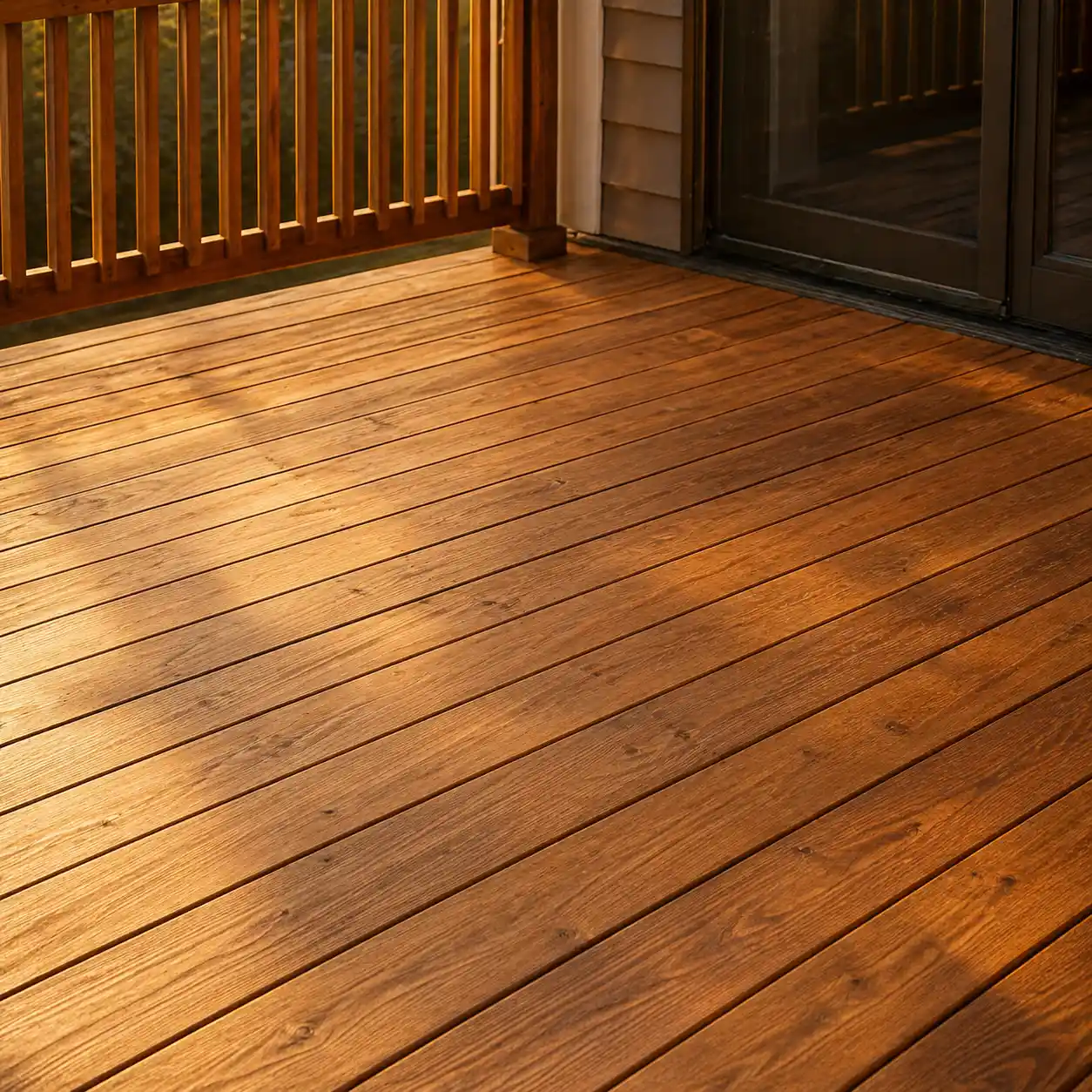
Still the Right Choice for Most Decks — When Built Correctly
Despite the growth of composite decking, pressure-treated lumber remains the most common choice for residential decks throughout central Virginia. The reasons are straightforward: it costs less upfront than composite, it works well in this climate when maintained, and it’s available in the dimensional sizes needed for both decking and structural framing. For homeowners who are comfortable with periodic maintenance, a pressure-treated deck built correctly is a sound long-term investment.
The problems associated with pressure-treated decks — premature rot, failing connections, boards that split and check quickly — are almost always the result of construction errors rather than material failure. Using the wrong fastener type, skipping proper ledger flashing, placing structural members in contact with soil or standing water, not allowing adequate drainage — these are the mistakes that cause a pressure-treated deck to fail in fifteen years instead of lasting thirty or more.
We’ve built a lot of pressure-treated decks throughout Charlottesville and central Virginia, and we’ve also assessed many aging ones. The difference between a deck that holds up and one that doesn’t is almost entirely in how it was built — not in whether the client chose the right or wrong material.
Schedule a Free ConsultationThe Details That Determine Whether a PT Deck Lasts
A pressure-treated deck’s longevity is largely determined by decisions made during construction — most of which are invisible once the decking boards are down. Here’s what we pay attention to on every build.
Correct Fastener Chemistry
Modern pressure-treated lumber uses copper-based preservatives — ACQ and CA treatments — that are corrosive to standard zinc-plated hardware. Using the wrong fasteners in pressure-treated wood causes rapid corrosion that eventually causes framing connections to fail and decking boards to stain. We use hot-dipped galvanized or stainless-steel fasteners and hardware rated specifically for use with current-generation pressure-treated lumber. This isn’t optional — it’s what the material requires.
Ledger Flashing
The ledger board — where the deck attaches to the house — is the most failure-prone connection on any attached deck. Without proper flashing, water gets behind the siding and into the band joist of the house, causing rot that can extend well beyond the deck itself. We flash every ledger board correctly, using appropriate flashing tape and metal Z-flashing to direct water out and away from the house framing before it can cause damage.
Footings Below Frost Depth
Footings that don’t extend below the frost line will heave seasonally as the ground freezes and thaws, racking the deck frame and stressing every connection above them. The frost depth in central Virginia varies from roughly 12 to 18 inches depending on the specific location — we dig to the required depth for your site, not to a standard depth that may or may not be adequate for the conditions.
Post Base Hardware
Posts that are embedded directly in concrete or sit on concrete without an elevated base will eventually rot at the bottom — concrete holds moisture against the wood end grain and accelerates deterioration. We set posts on elevated post base hardware that holds the wood above the concrete surface and allows air circulation. It’s a small detail that extends the life of the structural posts by many years.
Drainage Design
Water that pools on or under a deck accelerates rot throughout the structure. We design for drainage from the start — consistent board gaps for surface runoff, appropriate pitch where needed, and attention to how water moves off the deck and away from the house foundation. On sites where drainage is already a problem, we note it during the assessment and account for it in the design.
Lumber Grade Selection
Not all pressure-treated lumber is the same. Treatment retention levels vary — lumber rated for ground contact has a higher preservative retention than above-ground lumber and is required for any structural member that is close to or in contact with the soil. Using above-ground-rated lumber in ground-contact applications is a common shortcut that leads to premature structural failure. We specify the correct treatment level for each application within the build.
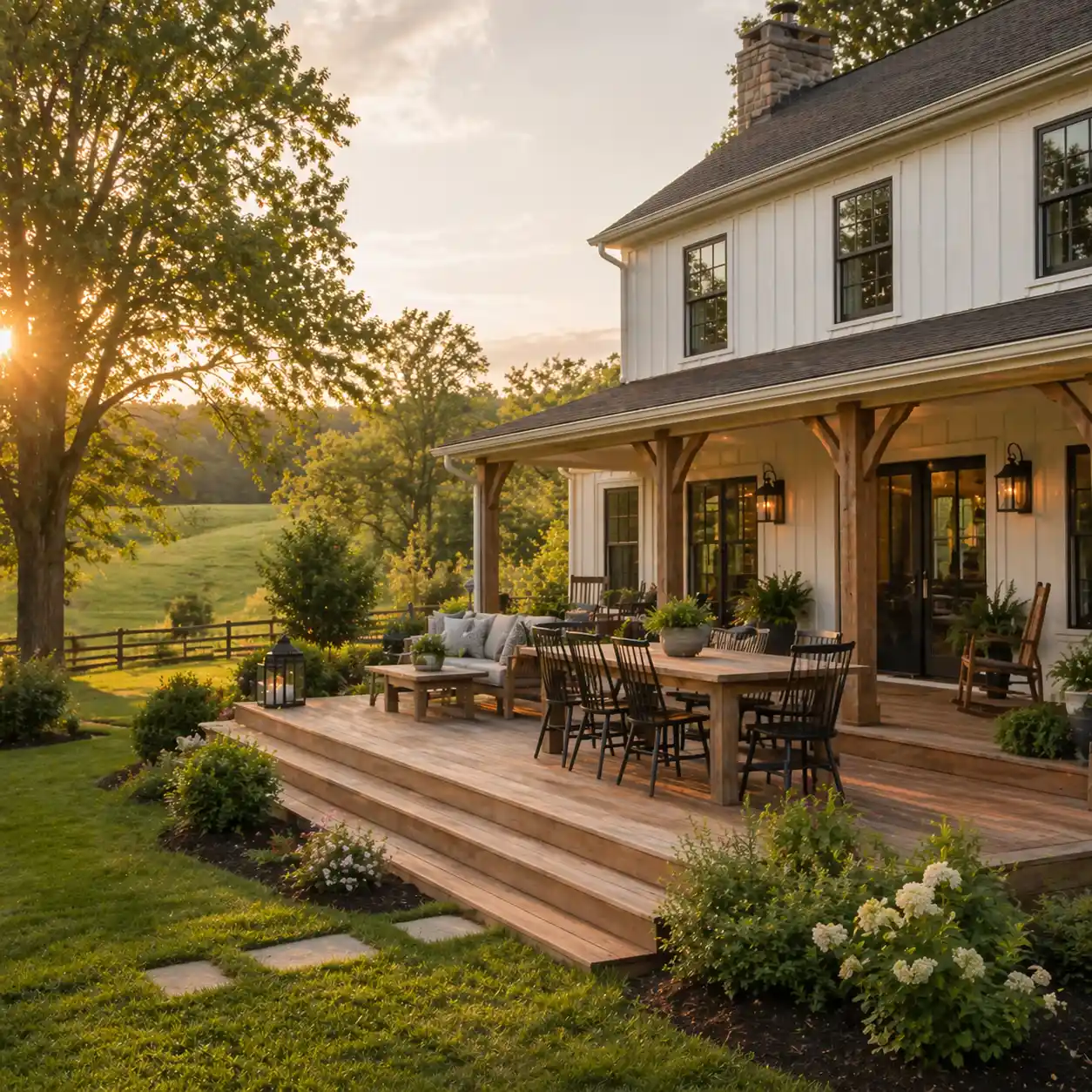
What Maintaining a Pressure-Treated Deck Actually Involves
The maintenance requirement is the most common objection to pressure-treated lumber, and it’s worth being realistic about what that actually means. A pressure-treated deck in Virginia’s climate needs to be cleaned and either stained or sealed periodically to maintain its appearance and slow surface deterioration. Every two to three years is the typical interval, though this varies based on sun exposure, tree coverage, and how the deck is used.
The first application is a specific case. New pressure-treated lumber needs time to dry out after installation before it will accept a stain or sealer properly — typically three to six months depending on the weather conditions. Applying finish too early traps moisture in the wood and results in poor adhesion. We advise clients on timing for the initial application after their deck is built, and we offer staining and sealing as a follow-up service once the wood is ready.
If periodic maintenance is something you know you won’t realistically stay on top of, that’s worth knowing before you choose a material. We’ll have that conversation honestly at your consultation — for some homeowners and some situations, composite or PVC decking is the more practical choice, and we’d rather tell you that upfront than have you end up with a deck that’s deteriorating because it hasn’t been maintained the way it needs to be.
Pressure-Treated Lumber Isn’t All the Same
The label says pressure-treated, but the treatment level and intended application vary. Using the right grade in the right location is one of the structural details that separates a deck built to last from one built to minimum standard.
Above-Ground (UC3B)
Rated for above-ground applications where the wood is exposed to weather but not in contact with the ground or concrete. Used for decking boards, railings, and above-ground framing members. Lower preservative retention than ground-contact lumber — not appropriate for applications where the wood contacts soil or holds moisture against a foundation.
Ground Contact (UC4A/UC4B)
Required for any structural member that is embedded in or rests directly on concrete, sits close to grade, or is in a high-moisture environment. Posts, bottom plates, and any framing within 6 inches of the ground should be ground-contact rated. Higher preservative retention than above-ground lumber and significantly more resistant to decay in soil-contact conditions.
Heavy Duty / UC4C
The highest retention level for wood foundation applications and permanent wood contact with the ground. Less commonly used in residential deck construction but appropriate for specific applications — posts embedded directly in soil on commercial builds, or structural members in consistently wet environments. We specify this level when the application calls for it rather than defaulting to the minimum grade.
Services That Go With a Pressure-Treated Deck
Most pressure-treated deck projects involve more than the decking boards alone. Here are the services most commonly paired with a PT deck build.
Deck Staining & Sealing
New pressure-treated decks need their first stain or sealer application after the wood has dried — typically three to six months post-construction. We offer staining and sealing as a follow-up service after new builds and as standalone maintenance for existing wood decks throughout the Charlottesville area.
Learn More →Deck Repair
If you have an existing pressure-treated deck showing wear, the first question is whether the framing underneath is sound. If it is, targeted board replacement and railing repair can extend the deck’s useful life significantly at a fraction of replacement cost. We assess honestly before recommending anything.
Learn More →Composite Decking
If you’re weighing pressure-treated against composite and want an honest comparison for your specific situation, that’s a conversation we’re well-positioned to have. The right answer depends on budget, maintenance preferences, and the environment the deck will be in — not a one-size preference either way.
Learn More →Pressure-Treated Deck Questions We Hear Often
Straight answers to the questions we get most often about pressure-treated deck construction.
A pressure-treated deck that’s built correctly and maintained regularly — cleaned and stained or sealed every two to three years — can easily last 25 to 30 years. The structural framing, built from the correct treatment grades with properly rated hardware, can outlast the decking boards themselves. Decks that fail in 10 to 15 years almost always had construction errors — wrong fasteners, improper flashing, inadequate drainage — not material failure. The material itself is durable when the build quality is there.
Yes. The pressure-treated lumber used for residential decks today uses copper-based preservatives — ACQ (Alkaline Copper Quaternary) and CA (Copper Azole) — that replaced the arsenic-containing CCA treatments phased out for residential use in the early 2000s. Modern treatments are considered safe for residential applications including decks, play structures, and raised garden beds. The preservatives are fixed within the wood cells and don’t leach significantly under normal conditions.
New pressure-treated lumber typically needs three to six months to dry sufficiently before it will accept a stain or penetrating sealer properly. The wood comes from the treating facility with elevated moisture content, and applying finish before it dries results in poor adhesion and premature peeling. A simple test: sprinkle water on the surface — if it beads up, the wood isn’t ready. When water absorbs into the surface, it’s ready for finish. The timing varies based on weather conditions and the specific product used. We advise on timing after every new pressure-treated build we complete.
Almost always construction errors rather than material failure. The most common causes: using standard zinc-plated hardware instead of hot-dipped galvanized or stainless steel hardware rated for current-generation pressure-treated lumber (the copper-based treatments corrode zinc-plated fasteners quickly); improper or absent ledger flashing that allows water to rot the house framing behind the deck; posts embedded directly in concrete without post bases, allowing moisture to deteriorate the wood at the base; and footings that don’t extend below frost depth, causing seasonal movement that stresses connections throughout the structure.
It depends on your budget, how long you plan to stay in the house, and how much maintenance you realistically want to do. Pressure-treated costs less upfront and performs well when maintained. Composite costs more initially but eliminates the periodic staining and sealing requirement. For homeowners who will own the deck for ten or more years and dislike maintenance tasks, composite’s lifecycle economics often make sense. For homeowners comfortable with periodic maintenance or working with a tighter budget, pressure-treated built correctly is a solid choice. We discuss both options honestly at every consultation.
Ready to Talk About Your Pressure-Treated Deck?
Fill out the form and we’ll schedule a free on-site consultation. We come to your property, look at the site, and talk through what you want to build — including an honest conversation about whether pressure-treated or composite makes more sense for your situation. No obligation to commit on the spot.
- Correct fastener chemistry and hardware for modern PT lumber
- Proper ledger flashing on every attached deck build
- Footings dug to local frost depth — not a standard minimum
- Written proposal with firm pricing before any work is scheduled
Request a Free Estimate
Fill this out and we’ll be in touch to schedule your free consultation.