Deck Railings & Balusters in Charlottesville, VA
Deck railings are structural elements first and design elements second. A railing that moves when you lean on it isn’t a cosmetic problem — it’s a safety issue that traces back to how the posts are attached and how the system was built. We build railings that are structurally sound in whatever material and style works for your deck, and we don’t treat the engineering as secondary to the aesthetics.
Request a Free Estimate
Tell us about your project and we’ll schedule a free on-site consultation — no obligation.
Structure First, Aesthetics Second
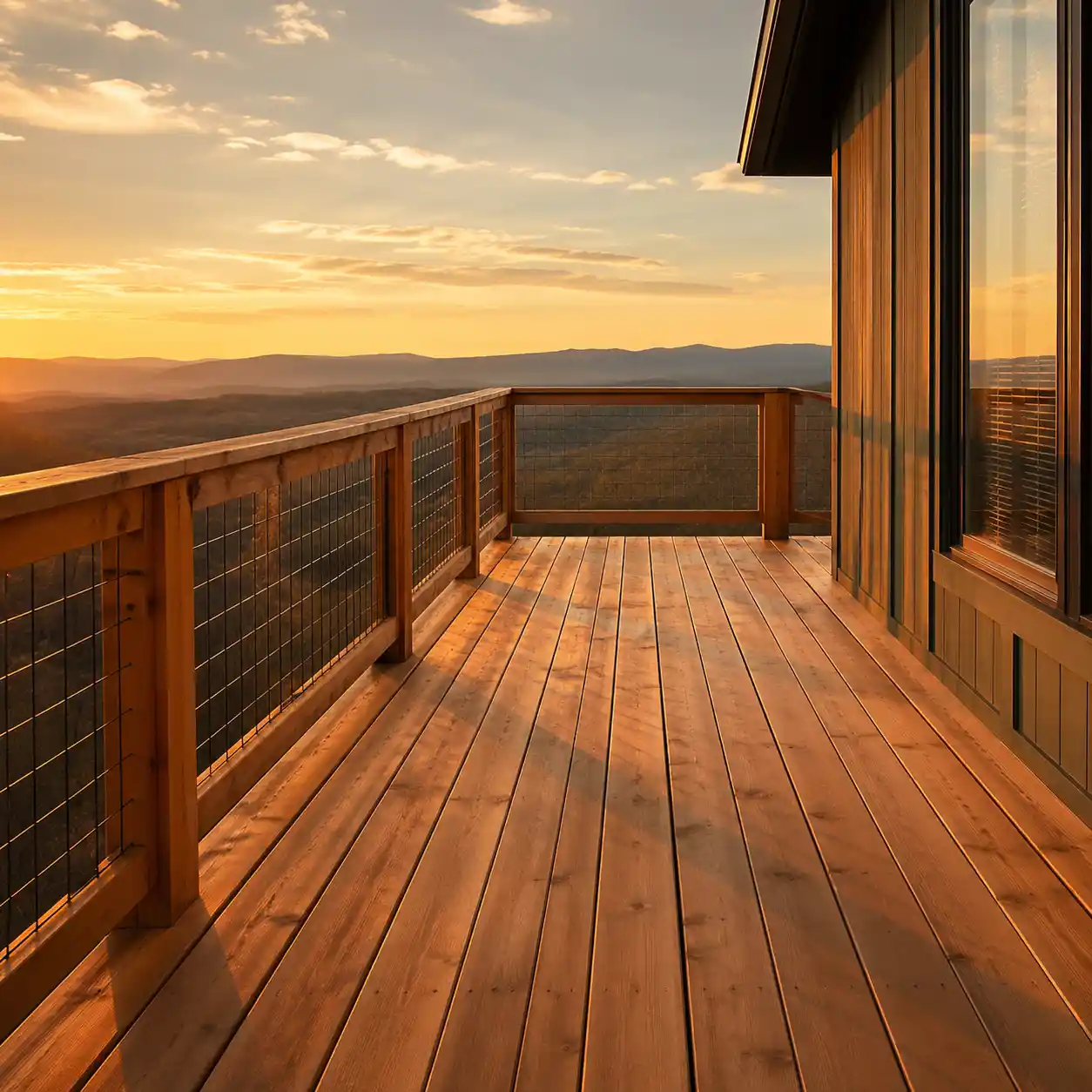
Railing style gets a lot of attention — wood balusters, cable rails, metal pickets, glass panels — and the appearance choices are genuinely important. But railing performance starts at the post, not at the baluster. A railing system built on posts that are improperly attached to the framing will move regardless of how attractive the balusters are, and a railing that moves is a safety hazard on an elevated deck.
Post attachment is the most structurally critical decision in railing construction. Through-bolted post connections that attach the post to the rim joist or a blocking system within the framing are substantially stronger than face-mounted connections or surface hardware. Building codes set minimum standards for railing strength — we build to those standards as a floor, not as a target.
We build railings as part of every deck project we complete, and we handle railing replacements as standalone work on existing decks where the railing has failed or where the homeowner wants to upgrade to a different material or style. Both situations start with the same attention to how the posts are attached before we think about what goes between them.
Schedule a Free ConsultationMaterial and Style Options We Build
Each railing material has a different appearance, maintenance requirement, and price point. The right choice depends on the deck design, the house architecture, and how much ongoing maintenance you want to commit to.
Wood Railings
Pressure-treated or cedar wood railings are the most common choice on wood decks. They match the material of the deck surface, are cost-effective to build, and can be painted or stained to any color. Wood railings require the same periodic maintenance as the deck surface — staining or painting every few years to maintain appearance and prevent deterioration. Post attachment on wood railings is critical; we through-bolt posts to the framing rather than relying on surface hardware alone.
Composite Railings
Composite railing systems pair naturally with composite decking and share the same low-maintenance characteristics. They’re available in a range of profiles and colors from the same manufacturers who make composite decking boards, making it straightforward to achieve a coordinated look. Composite railings typically use aluminum post sleeves and hidden structural posts, which provides both the appearance of composite and the structural integrity of aluminum.
Aluminum Railings
Powder-coated aluminum railings offer the lowest maintenance of any baluster-style railing system. They don’t rust, don’t need painting or staining, and hold their color well over time. Available in a range of colors and baluster profiles, aluminum systems look clean and contemporary and work particularly well alongside composite decking. The structural posts are aluminum throughout — no wood core to deteriorate over time.
Cable Railings
Horizontal stainless steel cable infill provides maximum view preservation — the horizontal lines are visually minimal and preserve sightlines from seated positions in a way that vertical balusters don’t. Cable railings work best on properties with views worth preserving — hillsides, water features, open land, or mountain backdrops. Posts must be sized and anchored to handle the significant tension loads cable systems generate at end and corner posts.
Glass Panel Railings
Tempered or laminated glass infill panels provide completely unobstructed views — nothing between the railing top rail and the deck surface is visible. Glass railings work well on properties with exceptional views where even cable lines would feel intrusive. They require specific post and channel hardware designed for glass loads, and the glass itself needs periodic cleaning to maintain appearance. Higher cost than other systems but unmatched transparency.
Metal Picket Railings
Wrought iron or steel picket railings offer a traditional aesthetic that works well on older homes and properties where a more formal look is appropriate. Steel requires periodic painting to prevent rust; powder-coated options extend the maintenance interval significantly. We build metal picket systems as part of deck projects where the design direction calls for it and where the house architecture supports the style.
What Makes a Railing System Actually Hold
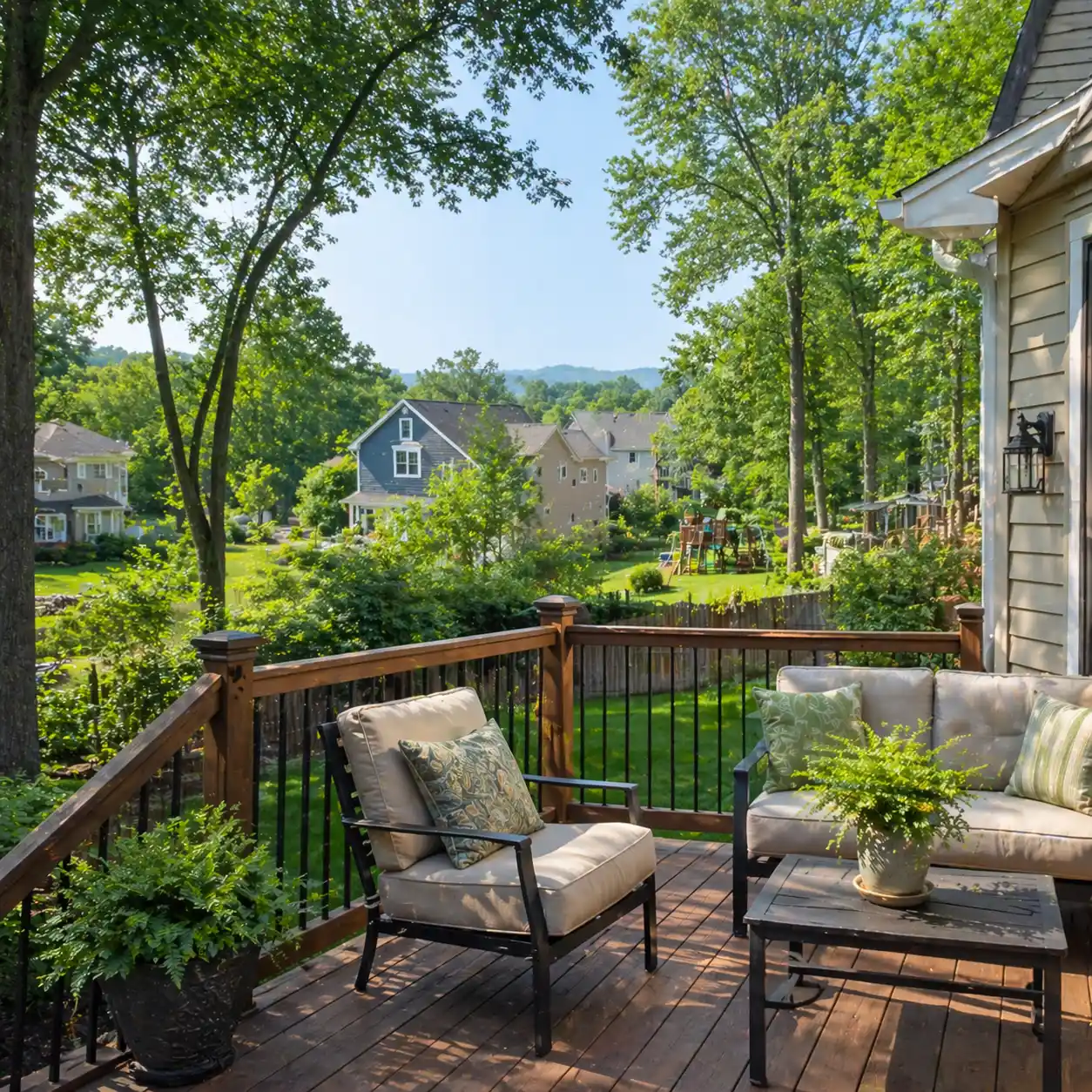
Railing failures — systems that wobble, lean, or come apart — almost always trace back to post attachment. The post is the structural anchor of the entire railing system. How it connects to the framing determines whether the railing as a whole can withstand the forces it’s designed to resist.
- Post attachment method — Through-bolted connections to the rim joist or blocking between joists provide significantly more resistance to lateral load than surface-mounted post bases or lag screws into the face of the rim joist. We use through-bolt connections with washers and structural blocking where the framing requires additional reinforcement.
- Post spacing — Closer post spacing reduces the span of top rail and bottom rail sections, which reduces the force each post must resist. On longer railing runs, post placement is designed to keep spans at appropriate lengths for the rail material being used — composite and aluminum rails have different deflection characteristics than wood.
- Top rail stiffness — The top rail needs to be stiff enough to transfer loads across the span to the posts without deflecting noticeably under hand pressure. Rail sizing — the cross-section dimensions — matters as much as the material. We size top rails for the span and the expected load.
- Baluster spacing — Building codes require baluster spacing that prevents a 4-inch sphere from passing through. We verify spacing on every installation — consistent spacing that also meets the code requirement.
Services Commonly Paired With Railing Work
Railing replacement or upgrade is often part of a broader deck project. Here’s what we most commonly pair with railing work.
Custom Deck Building
Every new deck we build includes a railing system designed to match the deck material and the homeowner’s style preferences. Designing the railing as part of the original deck project gives us the most control over post placement and structural integration.
Learn More →Deck Repair
Railing problems are one of the most common reasons homeowners call us for deck repair. If your railing is loose, leaning, or failing at the post connections, it can usually be addressed as a repair — provided the deck framing underneath is in sound condition. We assess the cause and fix it correctly.
Learn More →Deck Replacement
When a deck is being replaced, railing style and material is one of the most visible choices in the new design. Replacement is a natural opportunity to upgrade from a wood railing to cable, aluminum, or glass — the posts are coming out with the old deck anyway, and the new system can be designed into the replacement from the start.
Learn More →Deck Railing Questions We Hear Often
Straight answers to the questions that come up most before a railing project.
Virginia building code requires railings on decks that are 30 inches or more above grade. The minimum railing height is 36 inches for decks less than 30 feet above grade, and 42 inches for decks 30 feet or higher. These are minimums — we often build to 36 or 42 inches regardless of elevation because taller railings generally feel more secure and look more proportional on elevated decks. Local jurisdictions may have slightly different requirements, which we verify for your specific address before building.
Almost always a post attachment problem. The most common causes are posts that were face-mounted to the rim joist with lag screws that have loosened or pulled over time, posts that were surface-mounted with hardware that was never adequate for the load, or posts that were through-bolted but into rim joist material that has since deteriorated. We assess the cause when we come out — the fix depends on the specific attachment method and the condition of the framing the post connects to.
Yes, provided the deck framing is sound. Railing replacement is a common standalone project — removing the existing posts, top rail, and balusters and installing a new system. The key question is whether the rim joist and framing the new posts will connect to are in adequate condition. If the framing is compromised, railing replacement alone won’t address the underlying structural issue. We assess the framing condition when we look at a railing replacement project and let you know what we find.
Cable railings and glass panel systems provide the most view preservation. Cable railings use horizontal stainless steel cables that are visually minimal — particularly from the seated position where you spend most of your time on a deck. Glass panel systems eliminate even the horizontal cable lines and provide completely unobstructed views. Both require specific structural considerations at the posts, particularly at corners and ends where tension loads concentrate. We help you evaluate the options based on what the view actually looks like from the deck and what the structural situation allows.
Railing cost varies significantly based on the system type, the linear footage of railing, and the complexity of the layout — corners, stair railings, and gated sections all add to the scope. A wood baluster system is the most affordable option; cable and glass systems are at the higher end. We provide a written proposal with a firm price after assessing the specific project. There’s no charge for the assessment visit.
Ready to Talk About Your Deck Railing?
Fill out the form and we’ll schedule a free on-site consultation. Whether you’re choosing a railing system for a new deck build or replacing the railings on an existing deck, we come to your property, look at the specific situation, and put together a written proposal with a firm price — no obligation to commit on the spot.
- Wood, composite, aluminum, cable, and glass options — honest comparison for your situation
- Post attachment that meets and exceeds code requirements — not just surface-mounted hardware
- Railing replacement on existing decks without requiring full deck replacement
- Written proposal with firm pricing before any work is scheduled
Request a Free Estimate
Fill this out and we’ll be in touch to schedule your free consultation.