Deck Replacement in Charlottesville, VA
When a deck has deteriorated to the point where repair no longer makes financial sense, full replacement is the right answer. We remove the existing structure, assess any damage to the house at the attachment point, and build a new deck that’s properly designed for the site — often an opportunity to fix what wasn’t working about the original layout as well.
Request a Free Deck Assessment
Not sure if repair or replacement is the right call? We’ll come out and give you an honest answer — no charge.
Repair Doesn’t Always Make Sense — and We’ll Tell You When It Doesn’t
The question of whether to repair or replace a deck is one we take seriously, because the honest answer isn’t always the more expensive one. A deck with rotted surface boards but solid framing underneath is a strong repair candidate — replacing the boards and any failing railings can extend the useful life of the structure by many years at a fraction of replacement cost.
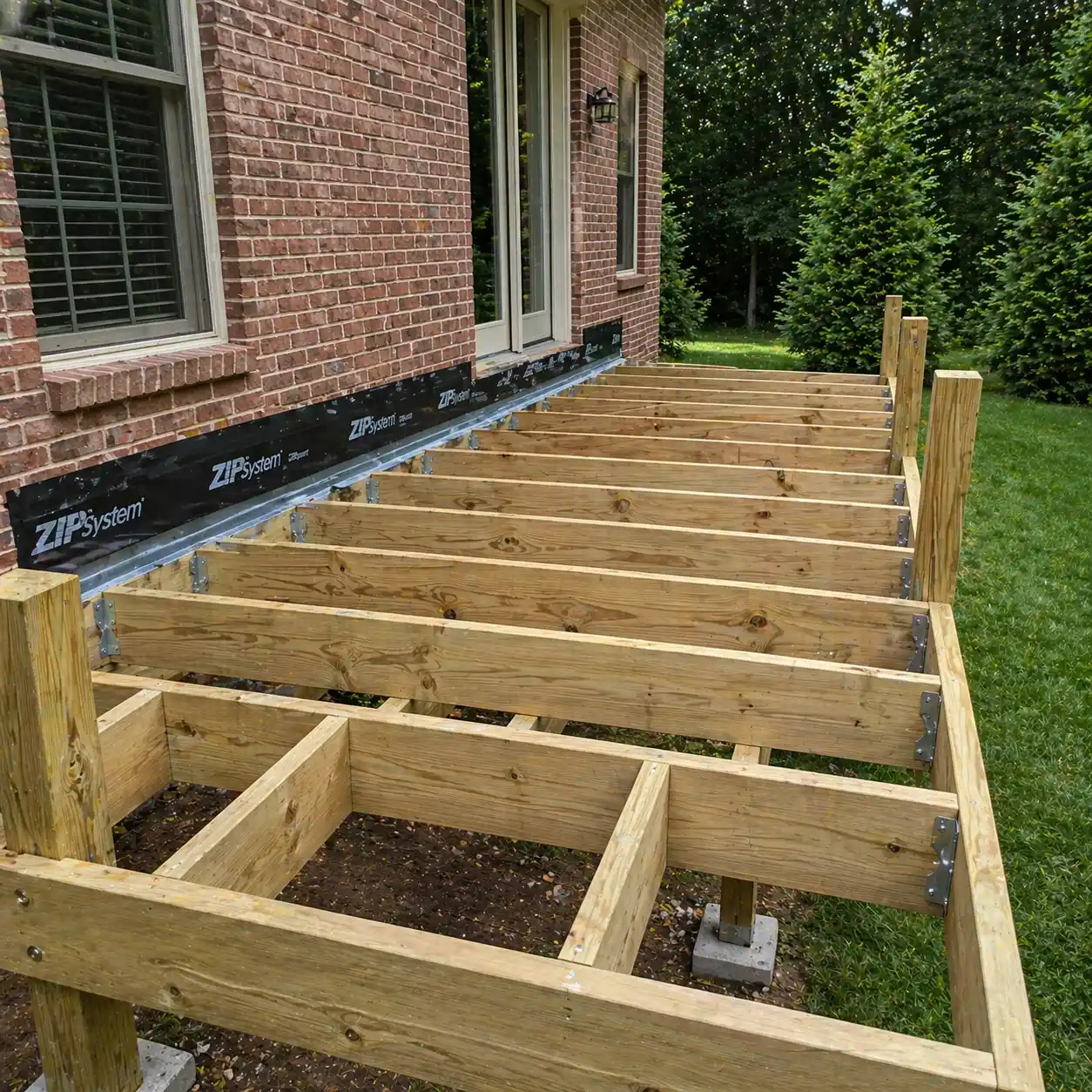
But when the framing itself has deteriorated — joists with significant rot, posts that have failed at the base, a ledger that’s been allowing water to get behind the siding for years — repair starts to cost nearly as much as replacement while leaving you on a compromised foundation. At that point, replacement delivers a deck that will actually perform for another two or three decades rather than a patched-up structure on borrowed time.
We assess every deck honestly before recommending anything. If repair is the right call, we’ll tell you that even though it means a smaller job for us. If replacement makes more financial sense over the long term, we’ll explain why clearly — with specific reference to what we found during the assessment — so you can make the decision with complete information rather than taking our word for it.
Schedule a Free AssessmentWhat We Look for When Assessing Whether to Replace
These are the conditions that push the repair-vs-replace calculation toward replacement. None of them are automatic — context always matters — but each one changes the math significantly.
Widespread Framing Rot
When rot has spread through multiple joists, the beam, or the posts, replacement becomes more cost-effective than sistering or replacing individual members. Repairing isolated rot is reasonable. Repairing a framing system that’s been compromised throughout — particularly when the rot has been advancing for years — often costs as much as starting fresh with properly pressure-treated structural lumber and correct flashing details.
Ledger Damage Extending to the House
When water has gotten behind the ledger board and reached the band joist or rim joist of the house itself, the repair scope expands beyond the deck into the house structure. At this point the ledger needs to be fully removed, the house framing assessed and repaired, and a new ledger properly flashed and re-attached. The total cost of doing this correctly often approaches the cost of a full deck replacement — so replacement becomes the sensible path.
Poor Original Construction
Some decks were built incorrectly from the start — inadequate footings, undersized joists, improper ledger attachment, or fastener types that were never right for the application. Repairing surface problems on a structurally unsound deck doesn’t fix the underlying issues. When the original build quality is the root cause of deterioration, replacement with correct construction is the only reliable path forward.
Repair Cost Approaches Replacement Cost
When we price out the actual repair — all the framing work, not just the surface — and the number approaches 60 to 70 percent of what a new deck would cost, replacement almost always makes more sense. You end up with a new deck on a sound foundation rather than a heavily repaired older one, and the remaining service life of the structure is substantially longer.
Layout No Longer Fits Your Needs
Sometimes the right reason to replace a deck is that the original design never really worked — it’s too small, poorly oriented relative to the house or the yard, or just doesn’t suit how you actually use outdoor space. If repair is already on the table and the existing layout is a problem, replacement is a chance to fix both issues at once rather than spending money to preserve a deck you’ve never quite been satisfied with.
Age and End of Service Life
A pressure-treated wood deck that’s 25 to 30 years old has reached or exceeded its expected service life for most of the original material and hardware. Even if the framing looks adequate today, the remaining useful years are limited. Replacement at this stage delivers a full service life rather than a few more years of declining performance on aging material.
What a Full Deck Replacement Actually Involves
Deck replacement isn’t just demolition followed by new construction — there are specific things to assess and address between removing the old structure and starting the new one. The most important is the ledger attachment point. When an old deck comes off, we have an opportunity to look at the band joist and rim joist of the house where the ledger was attached. If there’s rot or damage there, it needs to be addressed before the new ledger goes up — and this is one of the things that’s nearly impossible to assess without removing the old deck first.
The existing footings are another consideration. Depending on their condition, their placement, and the design of the new deck, they may be reusable or they may need to be replaced. We assess each one and make that determination based on what we actually find rather than assuming they can or can’t be kept.
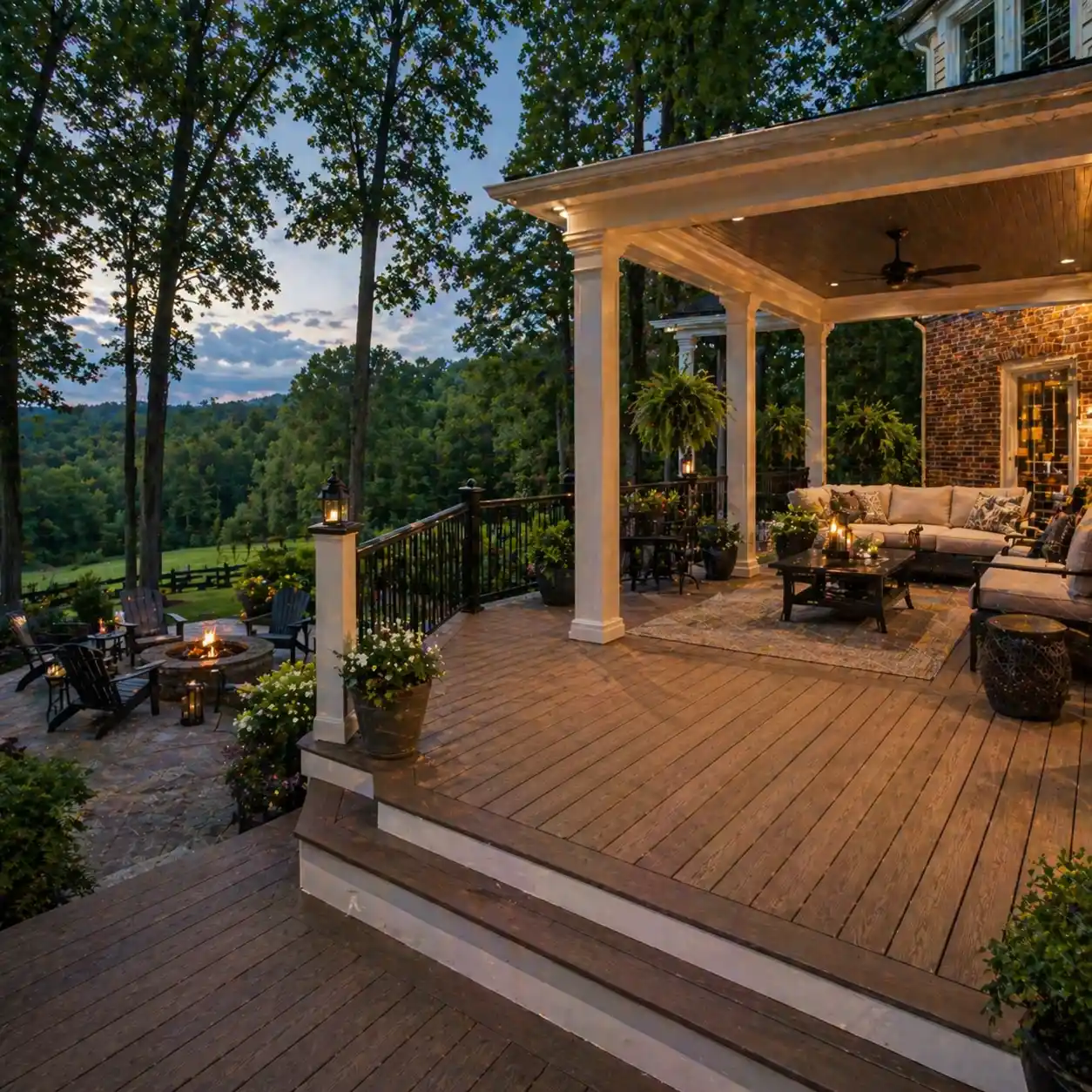
Replacement is also the right time to upgrade materials. If the original deck was pressure-treated wood and you’ve been dealing with maintenance, replacement is a natural point to consider composite or PVC decking — you’re building new anyway, and the material decision has the same long-term impact whether it’s made at initial construction or at replacement.
We assess the existing deck thoroughly — framing, ledger, footings, and the house attachment point — before confirming replacement is the right path and scoping the work.
We design the replacement deck — same footprint or a new layout if the original wasn’t working — and provide a written proposal with a firm price before any work is scheduled.
We remove the existing structure carefully, assess the house framing at the attachment point, and address any damage before new construction begins.
We build the new deck to the agreed design and walk the finished project with you before closing the job. If anything isn’t right, we take care of it first.
Replacement Is the Right Time to Reconsider Your Material
If you’ve been maintaining a wood deck for years and not enjoying the upkeep, replacement is a natural point to change direction. Here are the options we work with most on replacement builds.
Pressure Treated Lumber
The most cost-effective replacement option. If the original deck was pressure-treated and maintenance hasn’t been a problem, there’s no reason to change — modern pressure-treated lumber and hardware is better than what was available 20 or 30 years ago, and a properly built replacement deck in this material will outlast the original by a significant margin.
Composite Decking
The most popular upgrade choice on replacement builds. If you’ve been staining or sealing a wood deck every two or three years and not enjoying it, composite decking eliminates that maintenance obligation. The upfront cost is higher but the lifecycle economics are often favorable, particularly for homeowners who intend to stay in the house for ten or more years.
PVC & Capped Composite
The highest-performance option for moisture resistance and long-term appearance retention. Capped composite and full PVC boards don’t absorb water, won’t stain from tannins or organic debris, and hold their color well over time. The right choice for homeowners who want maximum durability and minimum maintenance from their replacement deck.
Not sure which material is right for your replacement deck? We walk through the options at your consultation based on your budget, maintenance preferences, and what the deck will be used for.
Talk to Us About Your ReplacementOther Services to Consider Alongside Replacement
A deck replacement is often combined with other improvements that are easier to do during the rebuild than as a separate project later.
Railings & Balusters
Replacement is the natural time to upgrade your railing system — the posts are already coming out with the old deck. Upgrading to cable, aluminum, or glass railings during a replacement costs less than doing it as a separate project because the structural work is already happening.
Learn More →Pergolas & Shade Structures
If the original deck lacked shade, combining a pergola with the replacement is straightforward — the framing design can account for pergola post placement from the start rather than trying to add it to a finished deck later.
Learn More →Deck Lighting
Wiring for deck lighting is considerably cleaner when it’s run during construction than when it’s retrofitted to a finished deck. If you’ve wanted lighting on your deck, replacement is the right time to plan for it — the conduit and junction boxes go in before the decking boards, not after.
Learn More →Deck Replacement Questions We Hear Often
If your question isn’t here, just reach out and we’ll give you a direct answer.
You often can’t tell from the surface. A deck that looks rough on top can have sound framing underneath — a good repair candidate. A deck that looks presentable can have joists that have been quietly rotting for years — a replacement candidate. The only reliable way to know is a physical inspection that includes probing the framing, checking the ledger, and looking at the post bases. That’s what our free assessment covers. We give you an honest answer based on what we actually find.
Yes. Replacement is an opportunity to redesign entirely if the original layout wasn’t working. We can change the size, the shape, the stair placement, the railing style, and the material. If you want to add features that weren’t on the original — a pergola, built-in seating, lighting — this is the right time to design them in. We treat every replacement as a new custom build rather than a copy of what was there before.
We handle the demolition and removal of the existing structure as part of the replacement project. The debris is loaded and hauled away — you won’t be left with a pile of old lumber in your yard. We also document what we find during removal, particularly at the ledger attachment point, so you have a clear record of the condition of the house framing before the new deck is built.
Sometimes. It depends on the condition of the existing footings, whether they were placed correctly for the original design, and whether the new deck layout requires footings in the same locations. We assess each footing during the removal phase and make a determination based on what we find. Reusable footings that are correctly placed are retained — there’s no reason to replace them if they’re sound. Footings that are cracked, heaved, or incorrectly placed for the new design are replaced.
Yes. A deck replacement — building a new deck in place of an existing one — requires a building permit in Charlottesville and in most surrounding jurisdictions, even if the new deck has the same footprint as the old one. We handle the permit process as part of every replacement project. Permit costs are passed through to you at actual cost with no markup.
Replacement typically costs more than a straightforward repair, but the gap narrows considerably when the repair is extensive. When repair costs approach 60 to 70 percent of replacement cost, replacement is almost always the better decision — you get a full service life rather than a few more years on a compromised structure. We give you both numbers when the assessment suggests repair and replacement are both viable options, so you can make the decision with clear information.
Ready to Talk About Replacing Your Deck?
Fill out the form and we’ll schedule a free on-site assessment. We come to your property, look at the existing deck honestly, and tell you whether repair or replacement makes more sense given what we find. If replacement is the right call, we put together a written proposal for the new deck — including any design changes you want to make — with a firm price before any work is scheduled.
We serve homeowners and commercial property owners throughout Charlottesville, Crozet, Waynesboro, Staunton, and across central Virginia. If you’re not sure whether we cover your location, just reach out and we’ll confirm.
- Free on-site assessment — honest repair vs. replace evaluation
- Full removal of existing deck included in replacement scope
- Design changes welcome — same footprint or completely new layout
- Written proposal with firm pricing before any work is scheduled
Request a Free Assessment
Tell us about your deck and we’ll come take a look — no charge.