Pergolas & Shade Structures in Charlottesville, VA
A pergola changes how a deck gets used and how often. It provides shade that makes the space comfortable in Virginia’s hot summers, gives the outdoor area a defined sense of enclosure, and adds architectural character that an open deck platform alone doesn’t deliver. We build pergolas as part of new deck projects and as additions to existing decks throughout central Virginia.
Request a Free Estimate
Tell us about your project and we’ll schedule a free on-site consultation — no obligation.
Shade Without Enclosure — and More Than That
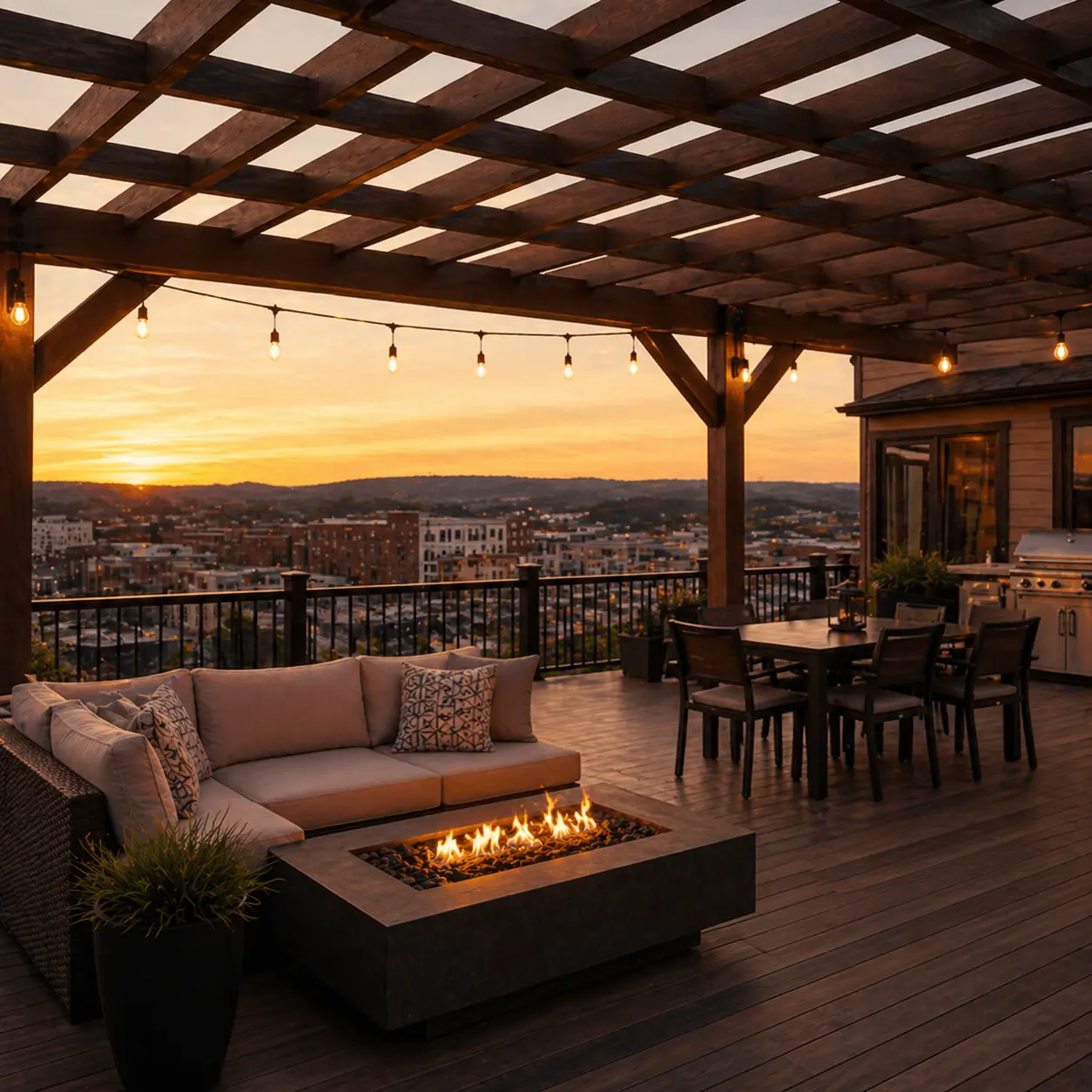
A pergola is one of the more practical additions you can make to a deck in Virginia’s climate. The state’s summers are hot enough that an uncovered deck in full afternoon sun is genuinely uncomfortable to sit on for much of the day — and in many parts of our service area, the usable hours on an open deck shrink considerably from June through August. A pergola doesn’t solve this completely, but it changes the calculation significantly. Even partial overhead coverage from rafters reduces the direct sun load considerably and makes the space usable earlier in the afternoon and later into the evening.
Beyond shade, a pergola does something that’s harder to quantify but consistently noticed by homeowners: it makes the outdoor space feel like a place rather than just a platform. A pergola gives the deck overhead definition, creates a visual boundary that distinguishes the outdoor living area from the rest of the yard, and adds architectural character that connects the structure to the house in a way a bare deck rarely achieves.
We build pergolas as part of the original deck project — the cleanest approach, since post placement and framing can be designed in from the start — and as additions to existing decks where the structure and footings can support the load. Both are achievable; combining them from the start is simply more efficient.
Schedule a Free ConsultationFreestanding, Attached, and Everything Between
Pergola design starts with a few fundamental choices — how it connects to the house, what it’s made of, and how open or covered the overhead structure is. Here’s how we think about each.
Attached Pergolas
An attached pergola connects directly to the house — typically to a ledger board at the roofline or at the top of the wall — with the opposite end supported by posts on the deck. This is the most common configuration for deck pergolas and creates the strongest visual connection between the house and the outdoor structure. The attachment point needs to be correctly flashed and anchored, the same considerations as a deck ledger.
Freestanding Pergolas
A freestanding pergola stands on four posts with no direct attachment to the house. This approach works when the attachment point isn’t suitable for a structural connection, when the pergola is positioned away from the house over part of the yard or deck, or when local building codes require it. Freestanding structures need their own footings designed to handle the full load independently, which we size appropriately for the structure.
Covered Roof Structures
A pergola with a solid or semi-solid roof — corrugated polycarbonate panels, shade cloth, or a proper roof structure — provides rain protection in addition to shade. This is the step between a pergola and a covered porch. The structural requirements increase with coverage density, and depending on the coverage type, permit requirements may differ from a standard open-rafter pergola.
Choosing a Pergola Material That Suits the Setting
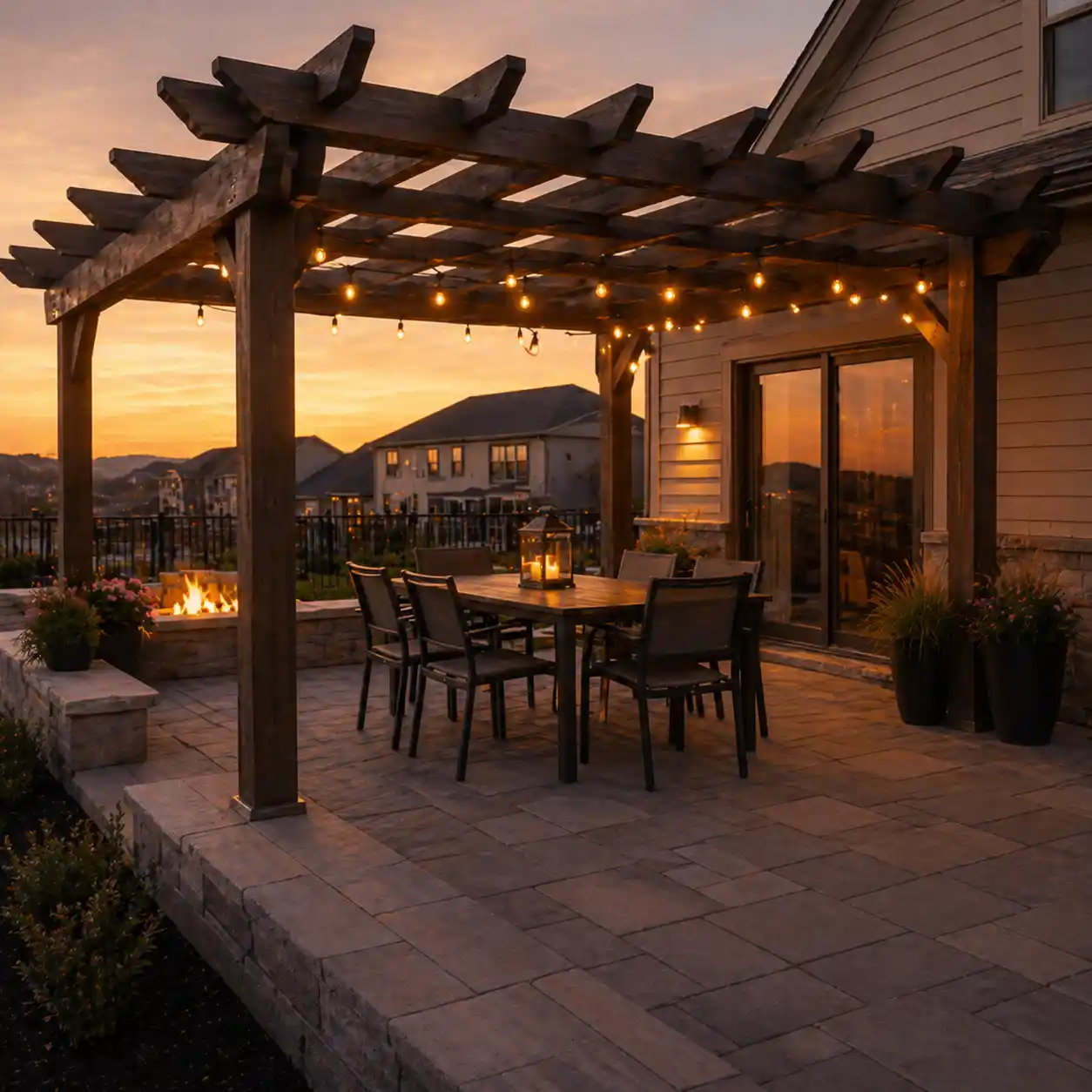
Pergola material choice affects appearance, maintenance requirements, and how well the structure holds up in Virginia’s climate. The right choice depends on which of those factors matters most to you.
- Pressure-treated lumber — The most cost-effective option. Works well for pergolas when correctly built with appropriate hardware and periodic staining. The large post and beam dimensions typical of pergola construction can look quite good in PT lumber. Requires the same maintenance as a PT deck — periodic cleaning and staining or sealing.
- Cedar — The premium natural wood option. Cedar’s natural oils provide inherent resistance to rot and insects that pressure-treated lumber achieves through chemical treatment. It looks and smells distinctly better than PT lumber, ages attractively when maintained, and suits the architectural character of older or higher-end properties particularly well.
- Aluminum — The lowest-maintenance option. Aluminum pergola systems are powder-coated for weather resistance and require no periodic painting or staining. They’re available in a range of profiles and colors, handle Virginia’s climate without deterioration, and are typically lighter than wood structures. The aesthetic is cleaner and more modern than wood — better suited to some houses than others.
We build in all three materials and can help you think through which suits your specific situation — the house architecture, the deck material it’s pairing with, and how much ongoing maintenance you’re willing to do.
What We Think Through on Every Pergola Build
A pergola that looks right and functions well isn’t just a matter of choosing material and putting up posts. Several design decisions affect both the appearance and the practical performance of the finished structure.
Post Size and Spacing
Pergola posts are typically larger in cross-section than deck posts — 6×6 is common where deck posts might be 4×4 — because the visual proportion of a pergola demands it as much as the structural load does. Post spacing affects both the visual rhythm of the structure and the span requirements for the beams above. We size these based on the specific structure and the look we’re aiming for, not a standard default.
Rafter Spacing and Orientation
The density of the overhead rafter grid determines how much shade the pergola actually provides. Closer spacing means more shade but also more visual weight overhead. Orientation matters too — rafters running perpendicular to the sun’s path across the sky provide more shade during peak hours than rafters running parallel to it. On properties where shade is the primary goal, we orient the structure to maximize coverage during the afternoon hours when the deck is most likely to be used.
View Preservation
On properties with good views — a hillside, a pond, an open field, or a mountain backdrop — the pergola design has to be thought through carefully so it frames rather than blocks the sightlines. Beam height, rafter orientation, and where posts are positioned all affect what you can see from inside the pergola. We work through this specifically on view-oriented properties rather than applying a standard design layout regardless of what the site offers.
Commonly Paired With Pergola Builds
A pergola is usually part of a larger deck project. Here’s what we most commonly build alongside or in combination with pergola structures.
Custom Deck Building
Designing a pergola into the deck from the start is the cleanest approach — post placement, footing design, and beam connections are all planned together rather than adapted to a finished deck. If you’re building a new deck, this is the right time to include a pergola.
Learn More →Screened Porches
A screened porch takes the pergola concept further — full enclosure with insect screening. If shade alone isn’t enough and you want to eliminate insects entirely, a screened enclosure is the next step. We build both and can help you decide which serves your situation better.
Learn More →Deck Lighting
Pergola beams and posts are natural locations for lighting — string lights, pendant fixtures, or integrated LED strip lighting. Planning for lighting during the pergola build is considerably cleaner than retrofitting it afterward. We coordinate lighting as part of the original project when clients want it.
Learn More →Pergola Questions We Hear Often
Straight answers to the questions that come up most before a pergola project.
In most cases, yes. Pergolas attached to the house are treated as additions and require permits in Charlottesville and most surrounding jurisdictions. Freestanding pergolas may or may not require permits depending on their size and the specific jurisdiction — some localities have thresholds below which freestanding structures don’t require permits. We research the requirements for your specific address and handle the permit process as part of every pergola project.
Yes, though it requires assessing whether the existing deck structure can support the additional load. Pergola posts typically need footings that extend to the ground independently rather than relying on the deck frame to carry the load. We assess the existing deck structure and design the pergola addition to work with it — which sometimes means adding new footings alongside the existing ones rather than connecting directly to the deck framing.
It depends on the rafter spacing and orientation. A pergola with rafters at 12-inch spacing provides noticeably more shade than one with 24-inch spacing. When the sun is directly overhead, a standard open-rafter pergola provides partial shade — enough to reduce the direct sun load and make the space more comfortable, but not full coverage. Shade is greatest in morning and evening when the sun is lower and the rafters cast longer shadows. For full shade coverage, adding shade cloth, polycarbonate panels, or a solid roof structure is the step up from a standard pergola.
A pergola has an open rafter roof that provides partial shade but no rain protection. A covered porch or covered deck has a solid roof that keeps rain out entirely. The structural requirements, permit process, and cost are all higher for a covered structure than for a pergola. A pergola is a good choice when shade is the primary goal and rain protection isn’t critical. A covered structure makes more sense when you want to use the space during rain or when the deck is in a location that gets significant weather exposure.
A well-built pergola in pressure-treated lumber that’s periodically stained or sealed should last 20 to 25 years or more. Cedar pergolas maintained with periodic oiling or sealing last similarly. Aluminum pergola systems are essentially maintenance-free and last indefinitely under normal conditions. As with decks, longevity is determined more by construction quality and maintenance than by material choice alone.
Ready to Talk About Adding a Pergola?
Fill out the form and we’ll schedule a free on-site consultation. Whether you’re adding a pergola to a new deck build or looking to add one to an existing deck, we come to your property, look at the site, and put together a written proposal with a firm price — no obligation to commit on the spot.
- Freestanding and attached pergolas — both designed around your specific site
- Pressure-treated, cedar, and aluminum — honest comparison for your situation
- Permit handling included for attached structures and qualifying freestanding builds
- Written proposal with firm pricing before any work is scheduled
Request a Free Estimate
Fill this out and we’ll be in touch to schedule your free consultation.