Screened Porches & Enclosures in Charlottesville, VA
A screened porch is one of the most practical outdoor improvements for a Virginia home. The state’s summers are warm and insect-active enough that an open deck is genuinely uncomfortable for much of the year — a screened enclosure changes that entirely. We build screened porches and deck enclosures that are properly framed, weather-tight at the transitions, and finished to the same standard as the rest of your home.
Request a Free Estimate
Tell us about your project and we’ll schedule a free on-site consultation — no obligation.
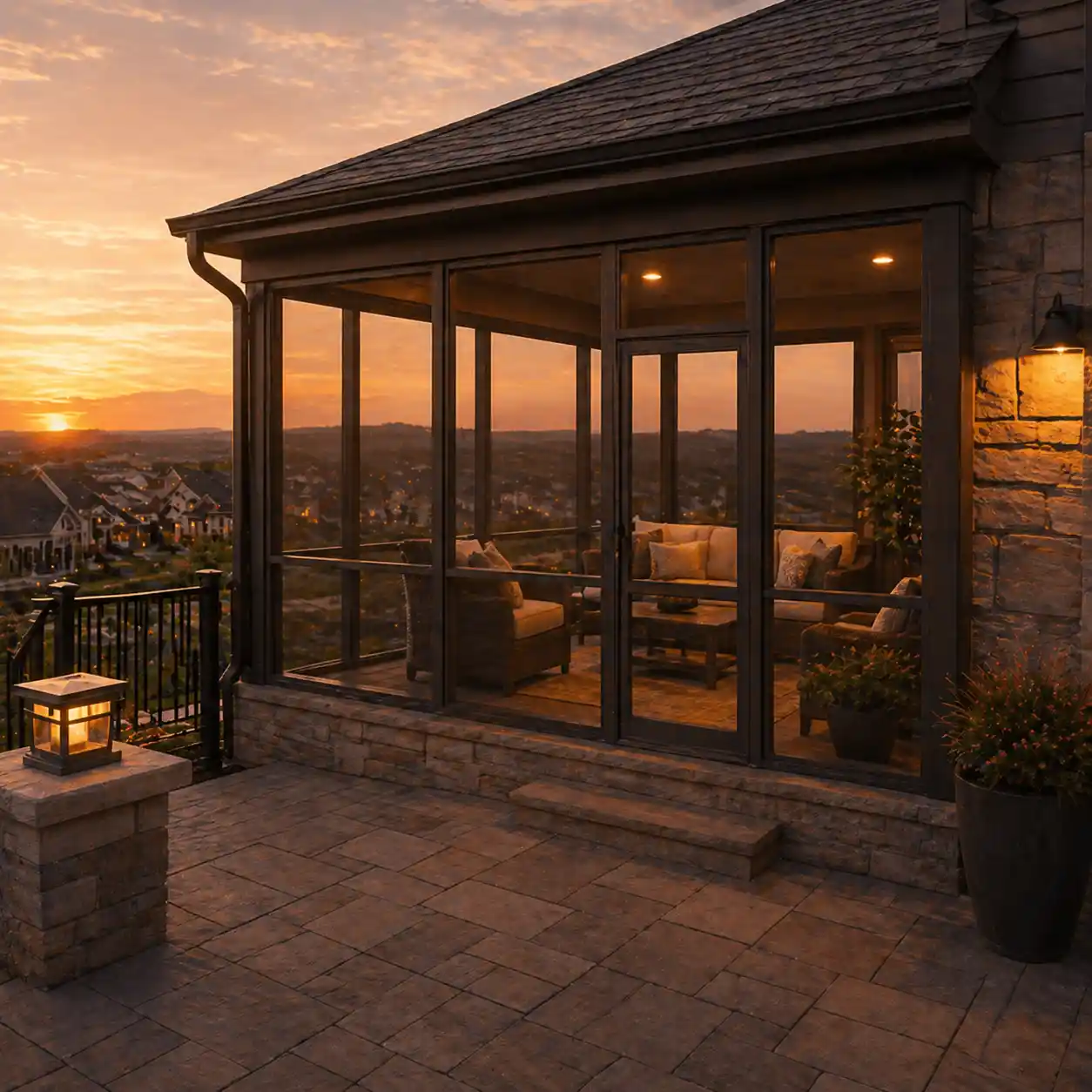
Outdoor Space You Can Actually Use — From Spring Through Fall
Virginia’s climate creates a particular problem for outdoor living: the months when you most want to use a deck — late spring through early fall — are also the months when mosquitoes, gnats, and other insects make an open deck difficult to enjoy in the evening. A screened porch solves this cleanly. It keeps insects out entirely, provides shade that makes the space comfortable during hot afternoons, and extends the practical use of the outdoor area from a narrow window of perfect weather to a much longer season.
The difference between a well-built screened porch and a poorly built one is substantial — and most of it is invisible once the screening is in place. A properly framed screened porch is built as a structural addition to the house, not as screening stapled to an existing deck frame. The framing carries the load of the roof structure, the screen panels are tensioned and mounted correctly, and the transitions between the porch structure and the house are properly flashed and finished so they don’t become water infiltration points over time.
We build screened porches as new construction — including the deck platform below, the framing, the roof, and the screening — and as conversions of existing decks where the existing structure is sound enough to build from. Both approaches are viable; starting fresh gives us more control over the design and the structural system.
Schedule a Free ConsultationThe Elements of a Properly Built Screened Porch
A screened porch involves more structural components than a deck alone. Here’s how we approach each element of the build.
Structural Framing
The wall and roof framing of a screened porch is structural — it carries the weight of the roof and transfers load to the deck platform below and to the house where it connects. We size framing members for the actual loads involved, not to minimum standards. The framing also provides the rigid framework that screen panels attach to, and adequate framing stiffness is what keeps screen panels taut and undistorted over time.
Roof System
The roof is what transforms a screened enclosure into a usable space — it provides rain protection, shade, and the structural backbone the walls connect to. We build screened porch roofs with proper pitch for water runoff, adequate ventilation, and details at the house connection that prevent water infiltration behind the siding. The roof pitch and style are designed to complement the house architecture, not just to shed water.
Screen Panel Installation
Screen panels are installed in a system that allows the screening to be tensioned properly and replaced when needed. We use screen spline systems that hold the mesh taut without visible staples or tacks on the face of the frame. Pet-resistant and heavy-duty screening options are available for households where standard fiberglass mesh wouldn’t hold up. The screening is installed as a system — not as individual pieces stretched across openings.
House Transition Details
Where the screened porch meets the house is the most detail-sensitive part of the build. The connection needs to be structurally sound, properly flashed to prevent water from getting behind the siding, and finished in a way that looks intentional from both inside the porch and from the exterior. We treat every house transition as carefully as we treat a deck ledger board — because the failure modes are similar and the consequences are similar.
Doors and Access
Screen doors need to be hung correctly on frames that are square and plumb — a screen door in a racked opening won’t latch properly and will sag over time. We size door openings appropriately for the porch access points, use door frames that are built square, and install hardware that holds up to regular use. On larger porches, multiple access points — including from inside the house and from exterior stairs — are part of the planning.
Floor and Deck Platform
The deck platform beneath a screened porch can be built from the same materials as an open deck — pressure-treated, composite, or cedar. Because it’s protected from direct rain by the roof, the deck surface in a screened porch typically holds up better than the same material on an exposed deck. We consider ventilation and moisture management below the deck platform as part of the design, since the enclosed space can trap moisture if not properly detailed.
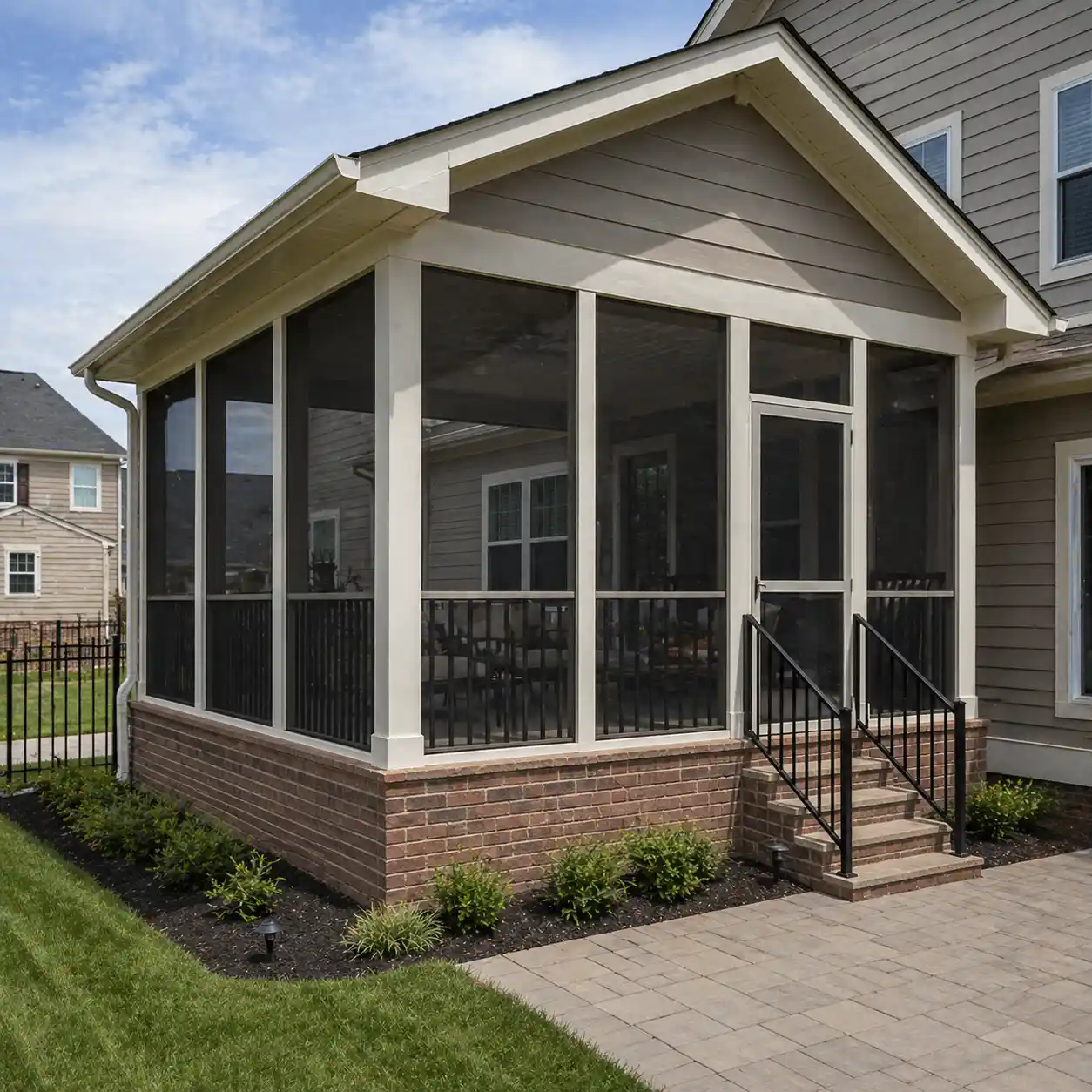
Building New vs. Converting an Existing Deck
Screened porches can be designed as new construction from the ground up, or built as conversions of existing open decks. Both are achievable — the right approach depends on the condition of the existing deck, how well its design translates to an enclosed porch, and what the total project cost looks like for each path.
A new build gives us more design control — the deck platform dimensions, the framing layout, and the roof structure can all be designed together as an integrated system. The result typically looks more intentional because nothing was adapted from an existing structure with different original requirements. New builds also allow us to size footings and framing specifically for the enclosed structure rather than adapting a deck that wasn’t originally designed to carry a roof.
Conversions make sense when the existing deck is in good condition, is sized correctly for the porch you want, and when the structural system can support the additional roof load. We assess the existing deck thoroughly before recommending a conversion — not every deck is a good candidate, and we’d rather tell you that upfront than discover a problem partway through the project.
Services Commonly Paired With Screened Porches
A screened porch is often built alongside or in place of a deck. Here’s what we most commonly build in combination with screened enclosure projects.
Custom Deck Building
Many screened porch projects include an attached open deck alongside the enclosed space — so you have both a protected insect-free area and an open platform for grilling, sunning, or enjoying clear weather. We design both as an integrated project so they work together visually and structurally.
Learn More →Covered Decks
A covered deck is the step between an open deck and a screened porch — it provides rain and sun protection without the full enclosure. If you want the covered feel without the screening commitment, a covered deck structure may be the right fit. We build both and can help you decide which serves your situation better.
Learn More →Deck Lighting
Screened porches are frequently used in the evening — which is precisely when you most want to be protected from insects. Lighting planned and wired during construction is far cleaner than lighting added after the fact. Ceiling fans with integrated lighting are a popular addition for screened porches that see heavy evening use.
Learn More →Screened Porch Questions We Hear Often
Straight answers to the questions that come up most before a screened porch project.
Yes. A screened porch is treated as a structural addition in virtually every jurisdiction we work in — it includes a roof, structural framing, and a connection to the house, all of which require permits. The permit process for a screened porch is more involved than for an open deck because the structural documentation includes the roof framing and load calculations in addition to the standard deck requirements. We handle the permit process as part of every screened porch project.
Sometimes. Whether an existing deck is a good conversion candidate depends on its structural condition, its footings, and whether its framing can carry the additional load of a roof structure. We assess the existing deck before recommending a conversion — checking the ledger, the footings, the joist sizing, and the overall condition of the framing. If the deck is sound and structurally adequate for the enclosed structure, conversion is viable. If it isn’t, we’ll tell you that and discuss what a new build would look like instead.
Standard fiberglass insect screening is the most common choice — it’s durable, provides good visibility, and is cost-effective. For households with pets, pet-resistant screening is significantly heavier-duty and holds up to claws and impact that would tear standard mesh. Solar screen or privacy screen options are available if sun control or reduced visibility from outside is a priority. We discuss the screening type at the consultation based on how the porch will be used and who will be using it.
A screened porch uses insect screening in the wall openings — it’s protected from insects but not from cold air, humidity, or rain driven by wind. It’s an outdoor space that happens to be enclosed. A sunroom uses glazing — glass or solid panel systems — in the wall openings and is typically conditioned or at least weather-tight enough to use year-round. Sunrooms are a different and considerably more expensive category of construction than screened porches. We build screened porches; sunroom additions are a different trade.
A screened porch takes longer than a standard deck — the additional framing, roof structure, and screening installation add time to the construction phase, and the permit process typically involves more documentation and review time. A straightforward screened porch addition on an existing deck might take two to three weeks of active construction. A new build that includes the deck platform, porch structure, and roof takes longer. We give realistic timelines at the proposal stage so you can plan accordingly.
Ready to Talk About a Screened Porch?
Fill out the form and we’ll schedule a free on-site consultation. We come to your property, look at the site, and discuss whether a new build or a conversion of an existing deck makes more sense — along with the design options and a written proposal with a firm price. No obligation to commit on the spot.
- Free on-site consultation — new builds and deck conversions both assessed
- Properly framed structure with roof, not just screening on an existing deck
- Permit handling included — screened porches involve more documentation than standard decks
- Written proposal with firm pricing before any work is scheduled
Request a Free Estimate
Fill this out and we’ll be in touch to schedule your free consultation.