Wraparound Decks in Charlottesville, VA
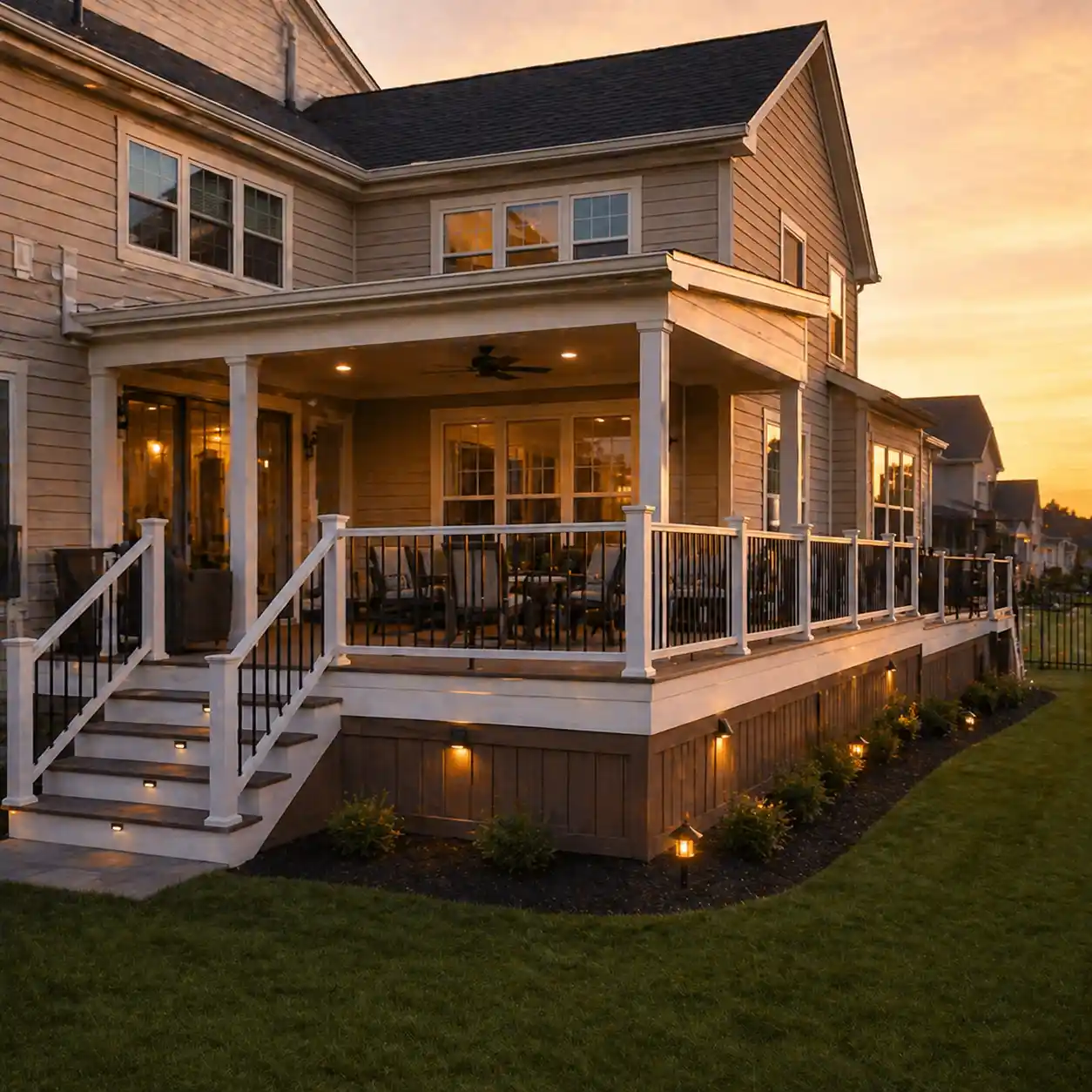
A wraparound deck takes the concept of outdoor living space beyond a single wall of the house and extends it around a corner — or around most of the building. The result is a deck with multiple orientations, multiple zones, and access from several points of the house. Done well, it’s one of the most functional and visually striking deck configurations available for a residential property.
Request a Free Estimate
Tell us about your project and we’ll schedule a free on-site consultation — no obligation.
More Than More Space — It’s a Different Kind of Space
A standard back deck faces one direction. A wraparound deck gives you multiple orientations — morning sun on one side, afternoon shade on another, the front yard view from one corner, the garden from another. This variety of orientations changes how a deck is used throughout the day and across the seasons, and it creates natural zones for different activities without requiring barriers or walls to separate them.
On properties where the house has attractive views in multiple directions, a wraparound deck is often the only way to actually take advantage of all of them. The front view, the side yard, the back yard — a wraparound makes them all part of the same connected outdoor living space rather than accessible only from inside the house through different rooms.
The practical appeal is also real for entertaining. Different groups can occupy different sections of the wraparound without crowding each other, traffic flow between kitchen access, seating areas, and dining areas can be organized around the wrap rather than competing for the same space, and the deck can accommodate more people than a comparably sized single-direction platform.
Schedule a Free ConsultationWhat Makes Wraparound Deck Design Different
Wraparound decks involve design details that don’t appear in standard single-wall deck builds. Getting these details right is what produces a wraparound deck that looks and functions as intended.
The Inside Corner Detail
Where two sections of a wraparound deck meet at the corner of the house, there’s an inside corner that requires careful attention to ledger attachment, framing intersection, and water management. Two ledger boards meeting at a house corner create a situation where water can get trapped at the inside corner if the flashing and drainage details aren’t handled correctly. This is the detail that distinguishes experienced wraparound deck builders from those who haven’t done many of them.
Decking Board Direction Changes
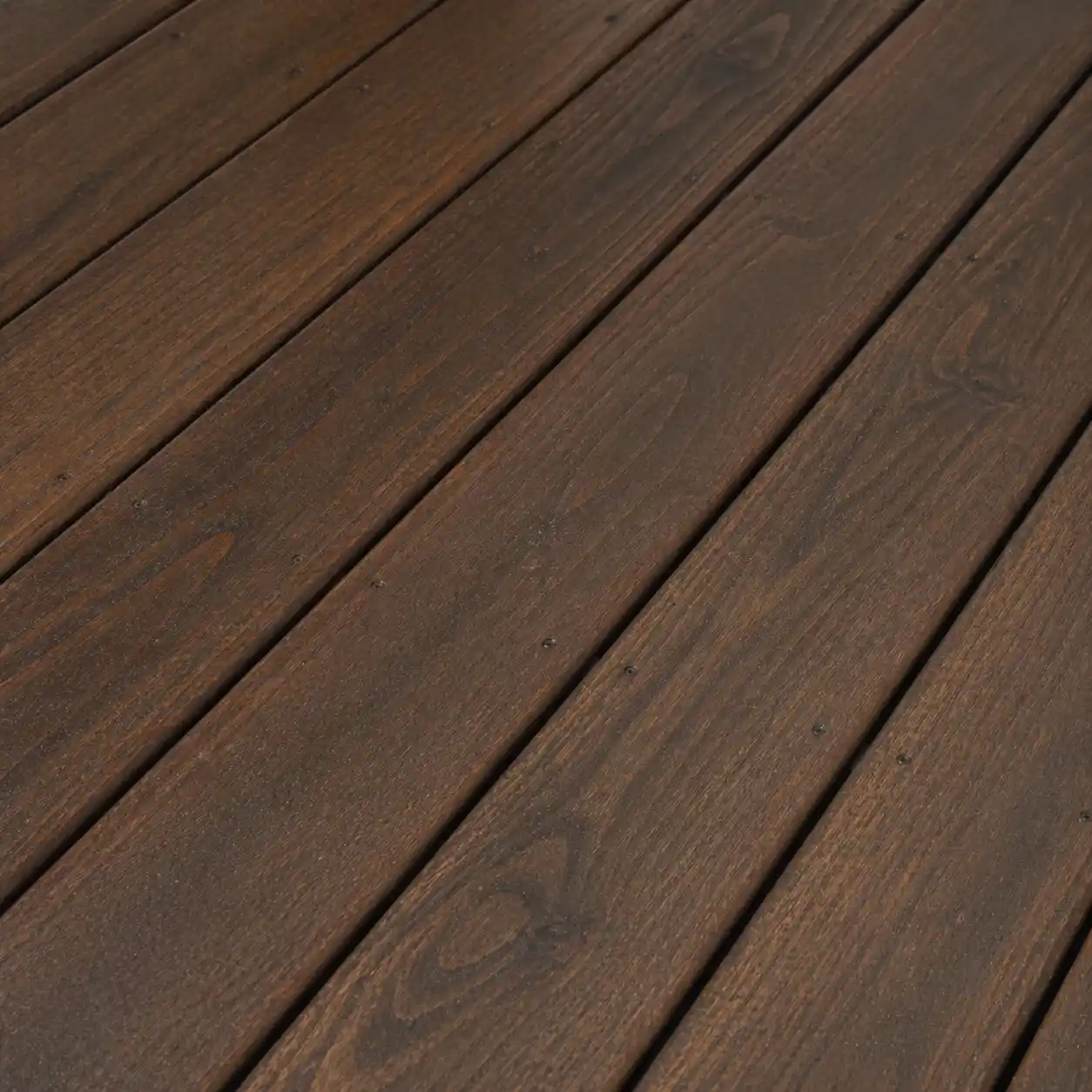
On a wraparound deck, the decking boards on each section run in different directions — the back section runs perpendicular to the house, and the side section runs perpendicular to the side wall. Where these two sections meet at the corner, there needs to be a transition detail — a picture frame border, a diagonal section, or a defined break — that handles the direction change cleanly without looking like a mistake. Planning this detail is part of the design process, not a field improvisation.
Stair Placement
Wraparound decks often have stairs at multiple points — one set off the back toward the yard, one set off the side toward the driveway or garden, and sometimes a set at the front for curb appeal. Where each stair is placed, how wide it is, and how it aligns with the surrounding yard elements is part of the design process. Stair placement on a wraparound deck has more impact on the overall appearance and function than stair placement on a simple back deck.
Railing Continuity
Railing on a wraparound deck needs to turn corners cleanly — both the outside corners at the perimeter of the deck and the returns at stair openings. This requires careful post placement and rail section planning to ensure the railing reads as a continuous, intentional element rather than a series of sections bolted together wherever they fit. We plan railing post locations as part of the framing design, not as an afterthought once the deck is framed.
Multiple Ledger Attachment Points
A wraparound deck attaches to the house at two walls, which means two ledger boards and two independent flashing systems. Each ledger needs to be attached to the house framing at appropriate spacing for the joist span it’s supporting, and each needs a proper flashing detail that keeps water out of the wall assembly behind it. We treat each ledger as its own engineered connection rather than repeating the same detail around the corner without regard for what’s on each specific wall.
Zone Planning
A wraparound deck is most successful when the different sections have defined purposes — dining here, lounge seating there, a morning coffee spot facing the sunrise. We discuss how each section of the deck will be used during the design process so the dimensions, features, and access points for each zone are planned intentionally rather than left to figure out after the deck is built.
The Property Characteristics That Favor a Wraparound Design
Wraparound decks work particularly well in specific situations. Understanding where the configuration makes the most sense helps determine whether a wraparound is the right approach for your property or whether a different configuration will serve you better.
- Properties with attractive views in multiple directions — If your property has a good view to the east from one side and a garden or wooded area behind the house, a wraparound lets you access both without going back inside. Single-direction decks mean you’re always looking the same way.
- Homes where access from multiple rooms is a priority — When the kitchen, living room, and master bedroom are all on the first floor but on different walls, a wraparound deck allows access from each without requiring a dedicated door cut on each wall. The deck wraps to each access point naturally.
- Traditional and farmhouse-style architecture — Wraparound decks and porches have deep associations with traditional American residential architecture. On homes with Craftsman, farmhouse, Victorian, or colonial architectural character, a wraparound deck or porch is architecturally sympathetic in a way it isn’t on contemporary or modern-style homes.
- Lots with morning sun and afternoon shade on different sides — A side of the house that catches morning sun and another that’s shaded in the afternoon gives you a wraparound deck that follows the comfortable part of the day around the house — morning coffee in the sun, afternoon relaxing in the shade, without moving anywhere.
Our Process for Wraparound Deck Projects
Wraparound decks require more upfront planning than a standard deck build. We invest in the design and engineering work at the start because it’s far less expensive to resolve details on paper than in the field.
We walk both walls of the house where the deck will attach, assess the grade, locate utilities, review the framing behind the siding at each ledger location, and identify any site constraints that affect the design. This is the foundation for everything that follows.
We develop the deck layout — dimensions for each section, stair locations, zone designations, decking board direction changes, and railing configuration — and confirm the design with you before moving to permit drawings. The inside corner detail and the transition between sections is resolved at this stage.
We prepare and submit the permit application with drawings. Wraparound decks typically require drawings that show both ledger attachment details and the corner connection. We handle the permit process and keep you informed of timeline and any review comments that require response.
Construction follows the approved design. We do a final walkthrough with you when the project is complete and address anything that doesn’t meet the standard before closing the job. You have a finished deck that matches what was designed, not an approximation of it.
Services Often Combined With Wraparound Deck Projects
Wraparound decks are frequently paired with other elements that take advantage of the space and access the wraparound creates.
Covered Decks & Pergolas
A covered section on one leg of a wraparound deck creates a shaded zone without covering the entire deck. This is a popular combination — one section shaded and weather-protected for dining, another open for sun and views. We design the covered section as part of the overall wraparound design so the transition is intentional.
Learn More →Deck Railings
Railing on a wraparound deck wraps around more perimeter than a standard deck and turns more corners — the railing system and post layout needs to be planned as part of the overall design. Cable railing and aluminum systems are particularly well suited to wraparound applications where clean corners and continuous visual flow matter.
Learn More →Deck Lighting
A wraparound deck benefits particularly from perimeter post cap lighting — the lights define the shape of the deck at night and provide ambient illumination across all sections. Step lighting at the multiple stair locations is also important for safety. Planning lighting with the wraparound design means wiring is incorporated into the build cleanly.
Learn More →Wraparound Deck Questions We Hear Often
Direct answers to the questions that come up most before a wraparound deck project gets started.
On a per-square-foot basis, wraparound decks cost somewhat more than simple rectangular decks — the corner detail, multiple ledger attachment points, additional railing corners, and more complex decking board layout all add labor relative to a simpler design. For a comparable total square footage, you should budget more for a wraparound than a single-wall deck. The additional cost buys meaningfully more functional outdoor space and a significantly more impressive visual presence for the property.
At minimum, eight feet of clear width is needed for a section to be genuinely usable as a seating or dining area — narrower sections become circulation corridors rather than destination spaces. Ten to twelve feet gives you comfortable flexibility for furniture arrangement. The back section of a wraparound is typically the widest, with the side sections narrower depending on available space and what they’re intended for. We design each section’s dimensions based on what it’s going to be used for, not an arbitrary minimum.
The inside corner is the most technically specific detail on a wraparound deck build. At the corner where two ledger boards meet, the framing from each section intersects and the flashing from each ledger needs to be continuous and overlapping without creating a water trap. We design the corner detail in advance — how the joists frame into the corner post or beam, how the flashing wraps the corner, and how the decking boards transition between sections — so it’s resolved before the first board goes up rather than improvised in the field.
Yes. Adding a second section to an existing back deck to create a wraparound is a common project — you keep the existing deck structure and add a new section that turns the corner. The connection between the existing and new section, the new ledger attachment on the side wall, and the transition in decking board direction all need to be designed and permitted. We assess the existing deck’s condition and connection points before designing the addition so the extension is built on a sound foundation.
Yes. A wraparound deck attaches to the house at two walls and in most configurations extends more than 30 inches above grade — both of which trigger permit requirements in Charlottesville and surrounding jurisdictions. Permit drawings for a wraparound typically need to show both ledger details and the corner connection, which is why design drawings are prepared before permit submission rather than submitted as sketches. We handle the full permit process on every wraparound project.
Ready to Talk About a Wraparound Deck?
Fill out the form and we’ll schedule a free on-site consultation. We walk both walls of the house, assess the grade and access points, and develop a design for the wraparound that works with the property rather than against it. Every wraparound project starts on-site — the site conditions inform too much of the design for it to happen any other way.
We serve homeowners throughout Charlottesville, Albemarle County, Crozet, Waynesboro, Staunton, and the surrounding areas of central Virginia.
- Free on-site assessment — we walk both walls before recommending a design or scope
- Inside corner detail and board transition designed in advance — not resolved in the field
- Permit coordination included — we handle the application from drawings through approval
- Written proposal with firm pricing before any work is scheduled
Request a Free Consultation
Tell us about your property and we’ll schedule a free site visit.