Cedar Decks in Charlottesville, VA
Western red cedar is one of the best decking materials available for homeowners who want the look and feel of real wood without the harshness of pressure-treated pine. It’s lighter, more dimensionally stable, naturally resistant to rot and insects, and it takes stain beautifully — producing a finished deck that looks substantially more refined than a standard PT lumber build at a fraction of the cost of tropical hardwood.
Request a Free Estimate
Tell us about your project and we’ll schedule a free on-site consultation — no obligation.
The Premium Natural Wood Option for Deck Surfaces
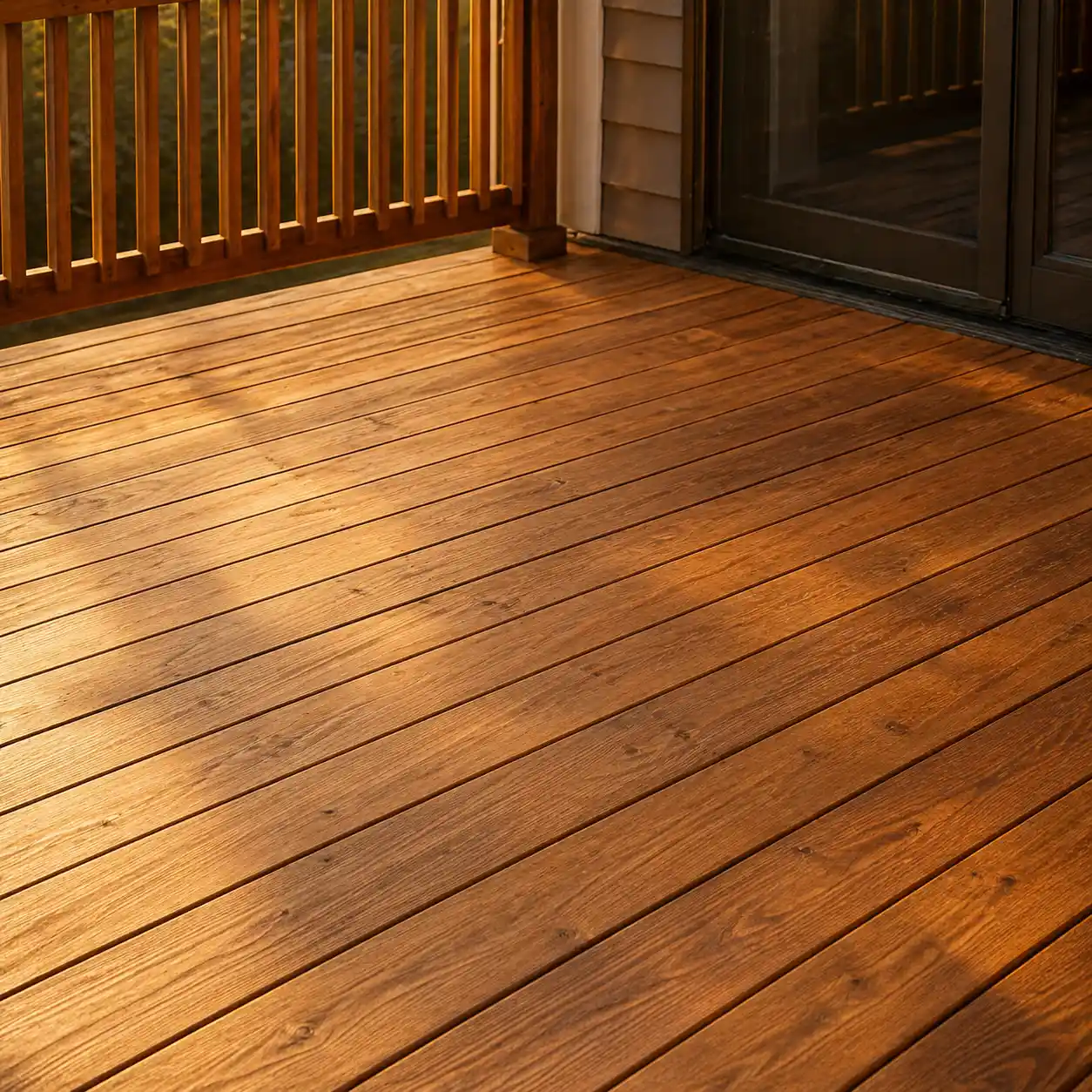
Western red cedar occupies a specific and well-defined place in the deck material landscape — above pressure-treated pine in appearance, stability, and natural durability, and below tropical hardwoods in cost and density. For homeowners who want a natural wood deck and aren’t satisfied with the appearance of PT lumber, cedar is the logical next step before composite or the significant cost jump to ipe or another tropical hardwood.
Cedar’s natural oils provide inherent resistance to rot and insects without chemical treatment. These oils also contribute to cedar’s dimensional stability — it moves less with moisture and temperature changes than PT pine, which means less cupping, checking, and gap variation over time. The tighter, more consistent grain of clear or select cedar grades produces a finished surface that’s noticeably more refined than standard PT lumber, and it accepts oil-based stains evenly and deeply.
The one thing cedar’s natural oils don’t do is eliminate the need for a periodic sealer or stain in Virginia’s climate. The oils slow deterioration but don’t prevent it — an unprotected cedar deck in central Virginia’s weather will still gray, check, and eventually deteriorate, just more slowly than unprotected pine. We recommend a penetrating oil-based sealer applied within the first year and reapplied every two to three years to keep a cedar deck looking its best and performing at its potential.
Schedule a Free EstimateCedar Grades and What They Mean for Your Deck
Cedar is sold in several grades that differ primarily in knot frequency and appearance. The grade you choose affects the finished look of the deck and the price — understanding the differences helps you get the appearance you want without overpaying for appearance characteristics that don’t matter to you.
Clear Cedar
The highest-grade cedar — virtually knot-free, with a tight, consistent grain across the board face. Clear cedar produces the most refined and uniform appearance of any natural wood decking option. It’s also the most expensive cedar grade. Best for high-visibility deck surfaces where the wood grain is a deliberate design feature and budget allows for premium material throughout.
Select Tight Knot (STK)
The most popular grade for residential cedar decks. STK allows tight, sound knots but prohibits loose or open knots that can fall out over time. The result is an attractive, natural-looking surface with some knot character — what most homeowners picture when they think of a cedar deck — at a meaningfully lower cost than clear cedar. This is the grade we recommend for most residential cedar deck projects.
#2 and Common Grades
Lower grades allow more knots, some of which may be loose or contain checks and splits. These grades are appropriate for applications where the surface appearance is less important — decking in hidden or low-visibility areas, or where cost is the primary driver. We typically use STK or clear for deck surfaces and reserve lower grades for less visible framing applications where they’re appropriate and cost-effective.
Keeping a Cedar Deck Looking the Way Cedar Should
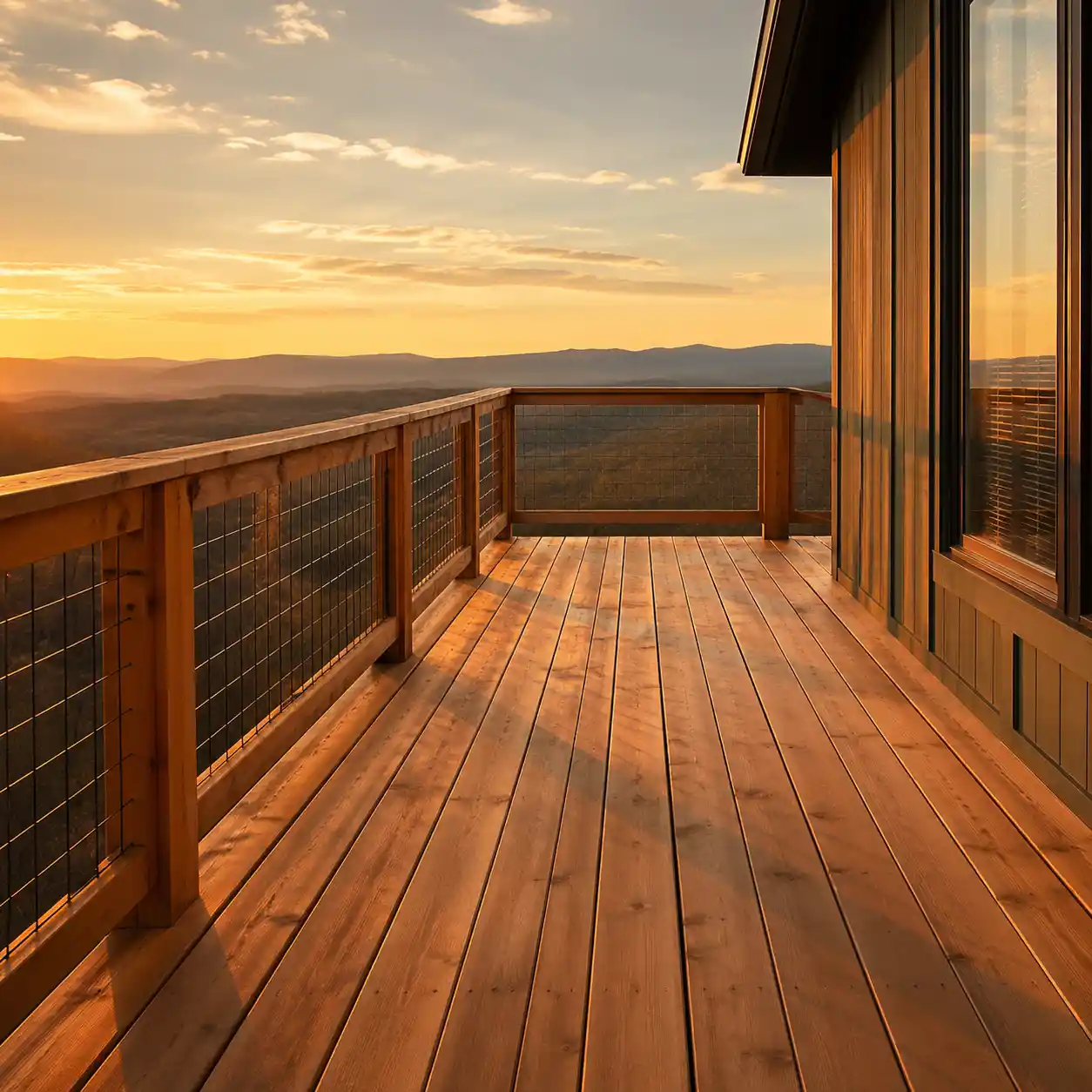
Cedar is more forgiving than PT pine in terms of natural durability, but it still needs periodic maintenance to perform at its best in central Virginia’s climate. The goal of maintenance is to preserve the wood’s appearance and slow the weathering process — not to fight it indefinitely without effort.
- Initial sealer application — within the first year — Unlike pressure-treated lumber, cedar can accept a penetrating oil-based finish soon after installation without waiting for the lumber to dry out from treatment. We recommend applying a quality oil-based sealer or semi-transparent stain within the first 6 to 12 months to protect the wood before weathering begins in earnest.
- Reapplication every 2–3 years — A penetrating oil-based sealer on cedar typically needs reapplication every two to three years in Virginia’s climate. Film-forming finishes like solid stains last longer between applications but are harder to remove when the time comes to recoat — we generally recommend penetrating products for cedar because they work with the wood’s natural oils rather than sitting on top of them.
- Let cedar silver gracefully if you prefer — Some homeowners choose to let cedar weather naturally to its characteristic silver-gray patina rather than staining it. This is a legitimate choice — cedar’s natural weathering is attractive and the wood remains serviceable longer without finish than PT pine. If you choose to let it silver, periodic cleaning to remove mildew and debris is still worthwhile.
- Annual cleaning — Removing debris, mildew, and organic buildup annually keeps the surface clean between applications and makes each staining or sealing job easier. A mild deck cleaner and light rinsing is sufficient for most cedar decks in good condition.
How Cedar Fits in the Broader Material Landscape
Cedar sits between pressure-treated pine and composite or tropical hardwood in both cost and performance. Understanding where it fits helps make the right choice for your project.
Cedar vs. Pressure-Treated Pine
Cedar costs more per board foot for decking surface material, but delivers a significantly better appearance, better dimensional stability, natural rot resistance without chemical treatment, and a much more attractive stained result. For homeowners who have looked at a fresh PT pine deck and found it visually unsatisfying, cedar is the natural step up — real wood, better looking, without the cost jump to tropical species.
Cedar vs. Composite
Composite offers lower long-term maintenance than cedar — no staining or sealing required, consistent color without intervention. Cedar offers the authenticity of real wood grain, a feel underfoot that composite can’t replicate, and the ability to be sanded, refinished, or repaired in ways composite can’t. For homeowners who genuinely prefer natural wood and are willing to do the periodic maintenance it requires, cedar is the right choice over composite.
Cedar vs. Tropical Hardwood
Tropical hardwoods like ipe are denser, harder, and more durable than cedar — but they’re also substantially more expensive, harder to work with, and require specific care (oil rather than stain) to maintain their appearance. For most homeowners, cedar delivers 80 to 90 percent of the visual impact of tropical hardwood at a fraction of the cost. Tropical hardwood makes sense when nothing but the absolute best will do and budget is not a constraint.
Services Commonly Combined With Cedar Deck Projects
Cedar decks are often part of a broader project or paired with ongoing maintenance services after the build.
Deck Staining & Sealing
Cedar’s maintenance cycle starts within the first year of installation. We offer staining and sealing as a natural follow-on to cedar deck builds — applying a quality penetrating oil-based product at the right time with proper surface preparation, and scheduling future applications as part of an ongoing maintenance program.
Learn More →Wood Deck Building
Cedar decking is always installed over a structural frame built from pressure-treated lumber. Our wood deck building service covers the full project — framing, footings, ledger attachment, and surface installation — regardless of whether the surface material is cedar, pine, or hardwood.
Learn More →Composite Decking
If you’re still weighing cedar against composite, we provide a clear comparison at the consultation based on your specific situation — factoring in how long you plan to own the deck, your maintenance preferences, and how important the natural wood aesthetic is to you. No obligation either direction.
Learn More →Cedar Deck Questions We Hear Often
Answers to what homeowners ask most when considering cedar for a deck surface.
For appearance and dimensional stability, yes. Cedar is lighter, more stable, naturally rot-resistant without chemical treatment, and produces a significantly more attractive finished surface — particularly when stained. For budget-constrained projects or applications where appearance is secondary to function, pressure-treated pine is a perfectly sound choice. Cedar’s premium over PT is real and meaningful for the right applications; it’s not always the right call for every project.
A cedar deck that’s properly built and maintained with periodic sealing can last 20 to 25 years in central Virginia’s climate. Cedar’s natural oils provide meaningful inherent durability — it holds up better than unprotected pine — but Virginia’s humidity and UV exposure will still work on unprotected cedar over time. Homeowners who stay ahead of the sealing schedule consistently get more service life out of cedar than those who let it go unprotected for extended periods.
A penetrating oil-based sealer or semi-transparent oil-based stain is generally the best choice for cedar. Cedar’s natural oils work better with penetrating oil-based products that absorb into the wood fiber than with film-forming water-based products that sit on the surface. Oil-based products also tend to produce richer, more saturated color on cedar grain than water-based alternatives. We provide specific product recommendations when we assess a cedar deck for its initial or maintenance staining — the right product depends on the deck’s current condition and what finish has been used previously.
Yes. Cedar’s natural weathering process produces a silver-gray patina that many homeowners find attractive — it’s a deliberate aesthetic choice for some, not just neglect. Unfinished cedar will check and develop a rougher surface texture over time, and it will deteriorate faster than maintained cedar, but it remains structurally serviceable for many years without any protective finish in typical above-grade applications. If you choose to let it silver, periodic cleaning to remove mildew and debris is still a good idea.
No. The structural framing — joists, beams, posts, ledger — is built with pressure-treated lumber regardless of the surface material. Cedar is used for the decking boards (the surface you walk on), stair treads, and fascia boards where appearance matters. PT lumber is the correct structural material for framing because it’s sized and graded for structural load-bearing and provides the appropriate rot and insect resistance for ground-contact and near-ground applications where cedar alone isn’t sufficient.
Ready to Build a Cedar Deck?
Fill out the form and we’ll schedule a free on-site estimate. We look at the site, discuss the design, and walk you through how cedar compares to pressure-treated and composite for your specific situation — so you can choose the right material with clear information. We serve homeowners throughout Charlottesville and central Virginia.
- Free on-site assessment — we evaluate the site before recommending a design or material
- Cedar grade recommendation matched to your appearance goals and budget
- Honest maintenance timeline so you know what to expect before committing
- Written proposal with firm pricing before any work is scheduled
Request a Free Estimate
Fill this out and we’ll be in touch to schedule your estimate.