Wood Deck Building in Charlottesville, VA
Composite and PVC have their place, but natural wood decking built correctly and maintained is still the right choice for many homeowners. Lower upfront cost, the look of real wood grain, and the straightforward repairability of a wood deck make it a practical option in central Virginia — provided the build quality and maintenance approach are appropriate for the climate.
Request a Free Estimate
Tell us about your project and we’ll schedule a free on-site consultation — no obligation.
Wood Still Makes Sense — When the Build Is Right
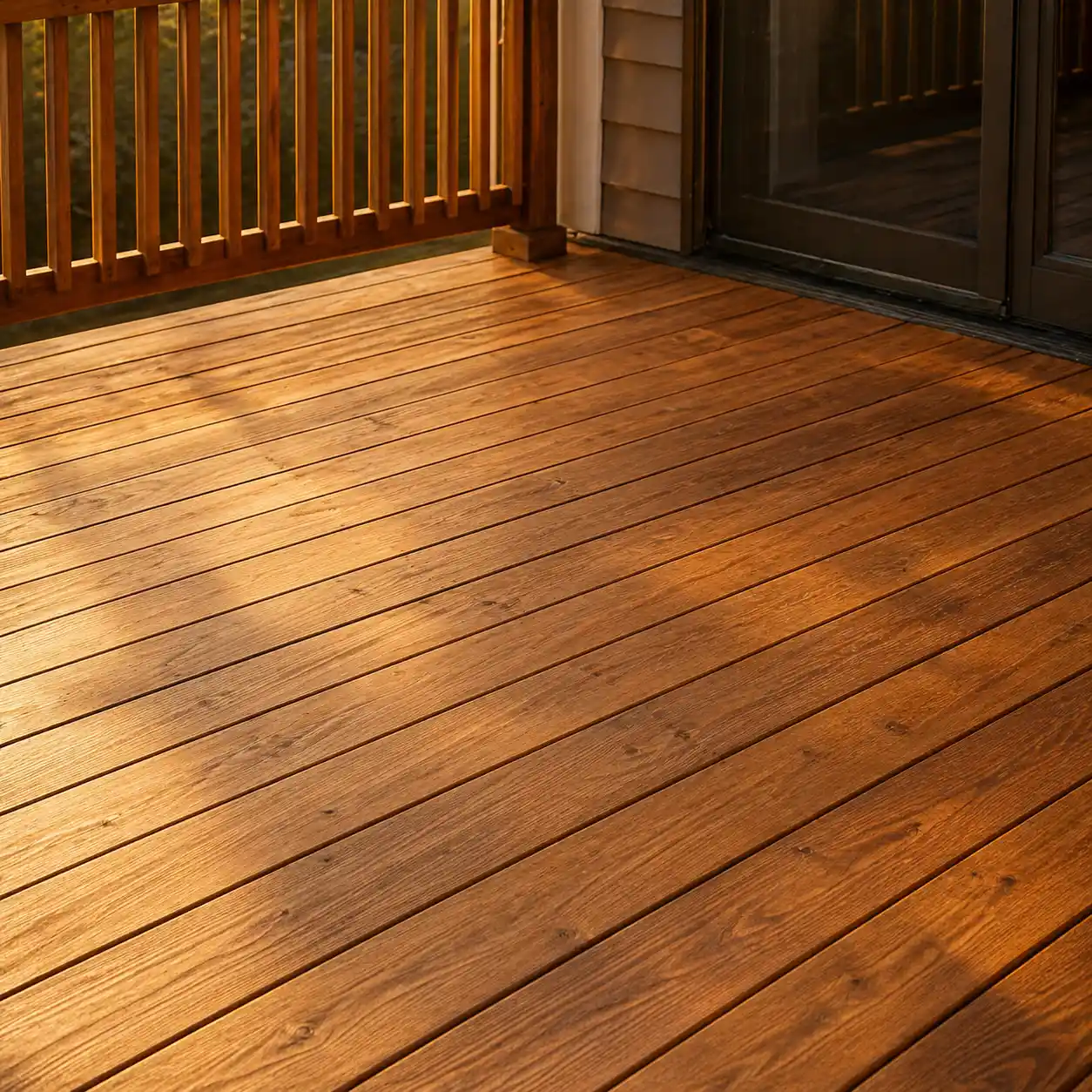
The conversation around wood vs. composite often oversimplifies the case for composite and undersells what a well-built wood deck can deliver. For homeowners who don’t plan to stay in the house for 15 or 20 years, who are working with a tighter budget, or who simply prefer the way natural wood looks and feels, pressure-treated lumber is a perfectly sound choice — provided the deck is built correctly and the maintenance commitment is understood and realistic.
The key variables that determine how long a wood deck performs well are build quality, hardware specification, and the maintenance schedule. A deck built with properly dried pressure-treated lumber, stainless steel or hot-dip galvanized hardware, appropriate joist hangers and post bases, and a proper ledger flashing detail will outlast a poorly built composite deck by a wide margin. Build quality matters more than material choice for most of the deck’s service life.
We give every client an honest comparison between wood and composite at the consultation. There’s no sales incentive to push one over the other — the right material depends on the situation, and we say so.
Schedule a Free EstimateWood Species and Grades We Build With
Natural wood decking isn’t a single material — different species and grades perform differently in Virginia’s climate, look different, and have meaningfully different price points.
Pressure-Treated Southern Yellow Pine
The standard for residential deck framing and the most common decking surface material in central Virginia. Modern pressure treatment (ACQ, CA, or MCA) provides effective rot and insect resistance. The lumber needs time to dry before it accepts a finish, and it develops surface checking and raised grain as it seasons — a natural characteristic, not a defect. Properly treated and maintained, a PT pine deck is a durable and economical choice that’s backed by a long track record in this climate.
Cedar
Western red cedar is a premium decking surface option — lighter weight than pressure-treated pine, more dimensionally stable, naturally resistant to rot and insects without chemical treatment, and significantly more attractive in appearance. Cedar takes stain beautifully and holds it better than pine. The tradeoff is cost — cedar decking runs notably higher than pressure-treated for the surface boards — and it still requires periodic sealing in Virginia’s climate. A strong choice for homeowners where appearance is a priority and budget allows.
Hardwood Decking
Ipe, tigerwood, garapa, and other tropical hardwoods are dense, hard, and naturally resistant to rot, insects, and weathering. They’re the longest-lasting natural wood decking option available and require less frequent maintenance than pine or cedar. The tradeoffs are cost — significantly higher than domestic species — and working difficulty. Tropical hardwoods are very hard and require pre-drilling for fasteners, sharp tooling, and more time to work with. When longevity and appearance are the priority and budget is not a constraint, hardwood decking is worth serious consideration.
The Details That Determine How Long a Wood Deck Lasts
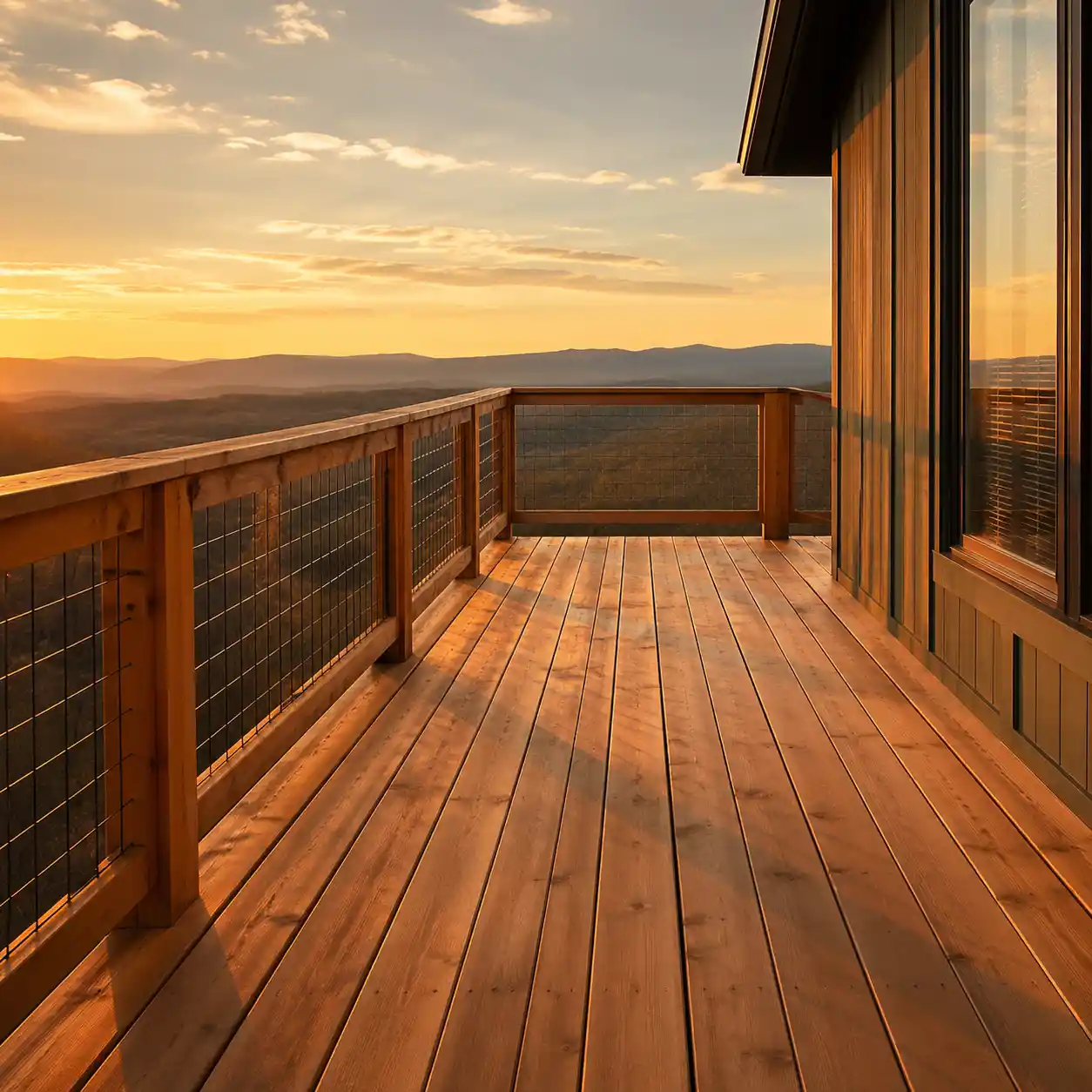
The difference between a wood deck that performs well for 25 years and one that needs significant repair or replacement at 10 years isn’t the lumber grade — it’s the build details that affect how water is managed, how hardware holds up, and whether the structure was designed correctly for the loads it carries.
- Ledger flashing — The ledger is the highest-risk location on any deck. Water that gets behind the ledger and into the house framing is the leading cause of serious structural damage in residential decks. We use a proper flashing and sealing system at every ledger that keeps water out of the wall assembly, not just a layer of tape or caulk applied to the face of the ledger.
- Hardware specification — Modern pressure-treated lumber is corrosive to standard hardware. We specify hot-dip galvanized or stainless steel fasteners, joist hangers, and post bases throughout — the hardware code compliance for current PT lumber isn’t optional, and the longevity of the structure depends on getting it right.
- Post base selection — Posts that sit in concrete or directly on concrete footings are at high risk for rot at the base. Standoff post bases that elevate the post above the concrete surface while providing a secure structural connection prevent this. We use standoff post bases on every wood deck build.
- Board spacing and drainage — Decking boards need consistent spacing to allow water to drain through the surface rather than pooling in the gaps. The gap also needs to be consistent enough that it looks intentional rather than variable. We use spacers throughout installation to maintain consistent gap sizing across every run of boards.
Wood Deck Maintenance in Virginia’s Climate
The maintenance commitment for a natural wood deck is real — and understanding what it involves before building is more useful than discovering it afterward. Here’s an honest picture of what a well-maintained wood deck requires in central Virginia.
Staining & Sealing Every 2–3 Years
A quality semi-transparent stain applied to properly cleaned and prepared wood typically needs reapplication every two to three years in Virginia’s climate — less frequently if the deck is partially shaded, more frequently if it’s in full sun. This is the core maintenance task for a wood deck and the one that has the most impact on how the deck looks and how long the surface lasts. We recommend pairing a new wood deck build with our deck staining service for the initial application once the lumber has dried.
Annual Cleaning
Annual cleaning — removing leaf debris, mildew, and dirt before they work their way into the wood grain — keeps the deck looking good between stain applications and prevents the kind of buildup that makes the next preparation and staining job harder. This can be done with a deck cleaner solution and a garden hose, with a light power wash, or by a professional as part of a maintenance visit. It’s a low-effort task that pays dividends in appearance and longevity.
Periodic Inspections
A quick annual inspection — checking the ledger, probing any boards that show surface checking or discoloration, looking at post bases for signs of moisture accumulation, and confirming that rail connections are solid — lets you catch issues before they become expensive. Decks that are maintained with this kind of attention stay in service significantly longer than those that are only addressed when visible problems appear. We walk homeowners through what to look for when we complete a new build.
Services That Go Hand-in-Hand With Wood Deck Builds
These are the services most often combined with a natural wood deck project — either at the time of build or shortly after.
Deck Staining & Sealing
Every wood deck needs its first stain application three to six months after construction once the lumber has dried. We offer staining and sealing as a follow-on service to every wood deck build — we know the deck, we know what was used, and we schedule the application at the right time based on conditions.
Learn More →Cedar Decks
Cedar is a step up from pressure-treated pine in appearance and natural durability. If you want the warmth of natural wood with better aesthetics than PT lumber, a cedar deck is worth exploring — we build with it regularly and can walk you through the comparison at the consultation.
Learn More →Composite Decking
If you’re weighing wood against composite and want a clear comparison based on your specific situation — budget, timeline, maintenance preferences — we provide that at no obligation. We don’t have a preference for one or the other; the right answer depends on the project.
Learn More →Wood Deck Questions We Hear Often
Honest answers to the questions that come up most when homeowners are deciding whether wood is the right choice.
Yes. The arsenic-based treatments that raised safety concerns in older pressure-treated lumber were phased out in 2004. Current residential pressure-treated lumber uses copper-based preservatives — ACQ, CA, or MCA — that are effective against rot and insects without the toxicity concerns of the older chemistry. These products are approved for residential use including contact with soil, concrete, and food garden applications. The main practical consideration is that copper-based treatments are more corrosive to metal fasteners than older PT chemistry, which is why hardware specification matters.
A wood deck built with quality materials and correct details and properly maintained can last 25 to 30 years in central Virginia. The surface boards typically need replacement first — usually after 15 to 20 years on a well-maintained deck — while the framing continues to perform. Decks that are neglected or built with inadequate flashing, incorrect hardware, or poor drainage details deteriorate much faster. Build quality and maintenance are the variables that matter more than the lumber grade.
It depends on your situation. If budget is the primary constraint, wood is the right starting point — the upfront cost advantage is real. If maintenance avoidance is a priority and you plan to own the deck for many years, composite often makes more sense over the full lifecycle. If you love the look and feel of real wood and are committed to the maintenance it requires, wood is a completely legitimate choice that many homeowners make for exactly those reasons. We walk through the comparison at every consultation so you can make the decision with clear information rather than a sales pitch for one direction.
Typically three to six months after construction, depending on weather conditions and the moisture content of the specific lumber. Pressure-treated lumber is wet from the treatment process and needs to dry before it will accept a stain or sealer. Applying finish too early traps moisture and results in adhesion failure. The water bead test is the practical indicator — when water applied to the surface soaks in rather than beading, the wood is ready for stain. We advise new wood deck clients on timing and are available to apply the first coat when the lumber is actually ready.
For the decking surface boards, cedar is worth the premium for homeowners who care about appearance and are building a deck where the wood grain will be the visual feature. Cedar is lighter, more dimensionally stable, and more attractive than PT pine, and it takes stain more evenly. The framing and structure is still built with pressure-treated lumber regardless of the surface material — cedar isn’t appropriate for ground contact or structural applications. The premium you pay for cedar decking is in the surface boards only, and whether it’s worth it depends on how much the appearance difference matters to you.
Ready to Build Your Wood Deck?
Fill out the form and we’ll schedule a free on-site estimate. We look at the site, talk through the design, and give you a clear comparison between wood and composite if you’re still weighing the two — with honest information about what each involves rather than a push toward the more expensive option. We serve homeowners throughout Charlottesville and central Virginia.
- Honest wood vs. composite comparison if you’re still deciding
- Correct hardware specification — stainless steel or hot-dip galvanized throughout
- Proper ledger flashing and drainage details that protect the house structure
- Written proposal with firm pricing before any work is scheduled
Request a Free Estimate
Fill this out and we’ll be in touch to schedule your estimate.