Pool Decks in Charlottesville, VA
A pool deck has different requirements than a standard residential deck — the surface sees constant water exposure, wet feet, and direct sun all summer. Material choice, surface texture, and drainage design matter more here than almost anywhere else in residential outdoor construction. We build pool decks that handle these conditions while looking the way you actually want your outdoor space to look.
Request a Free Estimate
Tell us about your pool and we’ll schedule a free on-site consultation — no obligation.
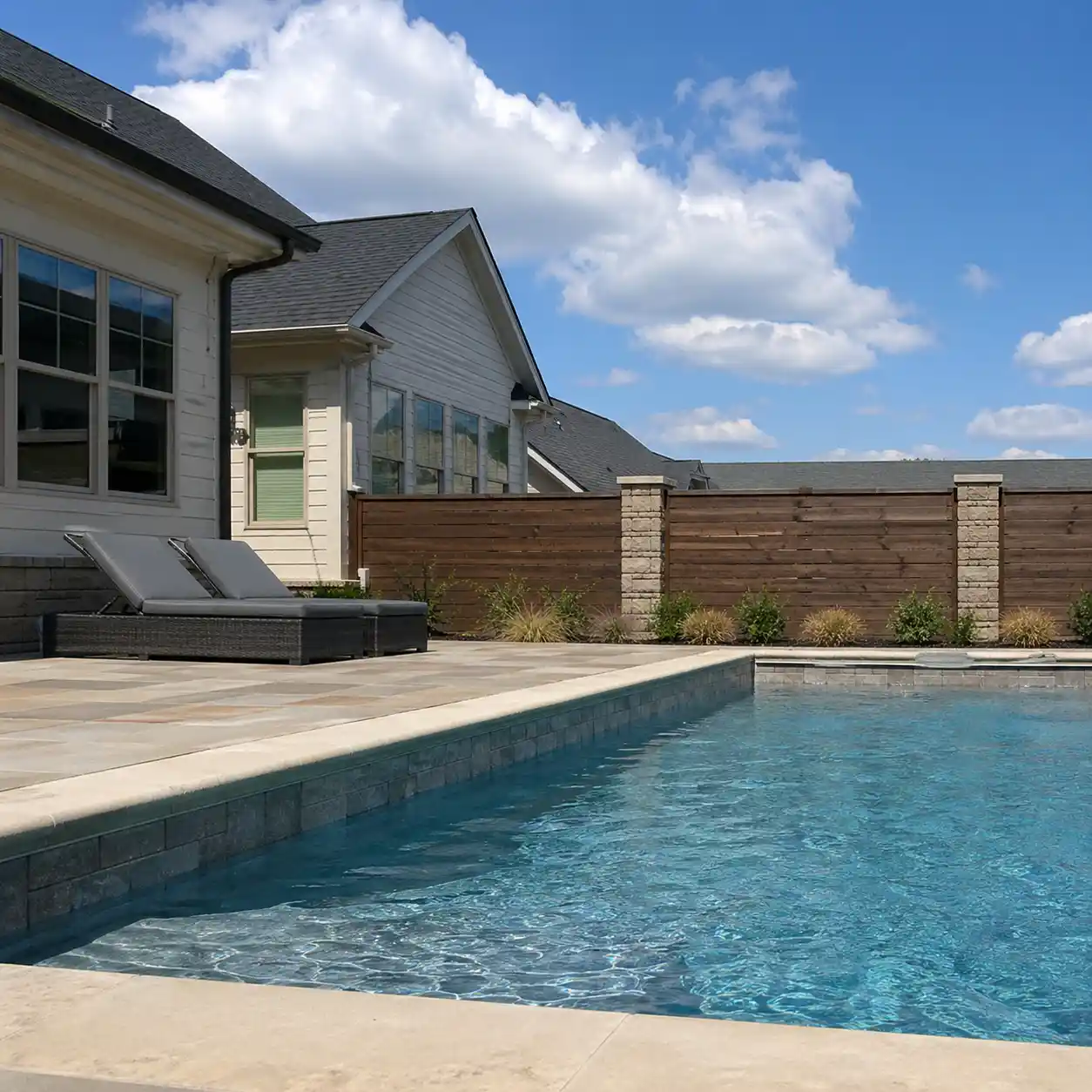
Different From a Standard Deck in Important Ways
Pool decks are subjected to conditions that a standard residential deck never sees — chlorinated water splashing onto the surface repeatedly, wet feet tracking back and forth all summer, intense reflected heat from the water surface, and direct full-sun exposure for most of the day. A deck material that performs well in a shaded backyard setting may not be the right choice for a pool surround, and a surface that looks beautiful dry may become dangerously slippery when wet.
The relationship between the deck surface and the pool coping also requires coordination that standard deck builds don’t involve. The finished deck height needs to be designed relative to the pool coping height, and the transition between the two materials needs to be planned from the start rather than resolved in the field. On above-ground pools this is simpler; on in-ground pools it typically involves the pool contractor and the deck contractor working from a shared plan.
Drainage is a third consideration that matters more at a pool deck than elsewhere. Water from the pool, from bathers, from rain, and from pool maintenance equipment all needs to move away from the deck surface and away from the pool equipment and any adjacent structures. We design the deck grade and any necessary drainage provisions as part of the initial project plan, not as an afterthought when water problems appear later.
Schedule a Free ConsultationWhich Materials Work Best for Pool Decks
Not every deck material is equally suited to pool environments. The characteristics that matter most — slip resistance, heat retention, moisture resistance, and compatibility with pool chemicals — vary significantly across the options.
PVC Decking
The strongest performer in pool environments. Full PVC boards don’t absorb water, aren’t affected by pool chemicals, and maintain a slip-resistant textured surface throughout their service life. They’re also available in light colors that reduce heat retention compared to darker composite options — a meaningful consideration for a deck that gets direct sun all day and is walked on barefoot. Our first recommendation for most pool deck applications.
Capped Composite
Mid-tier and premium capped composite performs well in pool environments — the capping layer resists moisture absorption and staining from pool chemicals. The main consideration is heat retention: darker composite boards absorb and hold heat significantly in full sun, making lighter color choices important for pool decks. Choose a product with a textured surface rather than a smooth one for the slip resistance that a wet pool surround requires.
Pressure-Treated Wood
Works for pool decks but requires more maintenance than composite or PVC alternatives. Wood needs to be sealed more frequently in a pool environment than in a standard deck setting because the constant moisture exposure accelerates weathering. The advantage is lower upfront cost and a natural look that some homeowners prefer. If pressure-treated is the choice, we specify appropriate hardware rated for the chemical environment and recommend a maintenance schedule suited to the conditions.
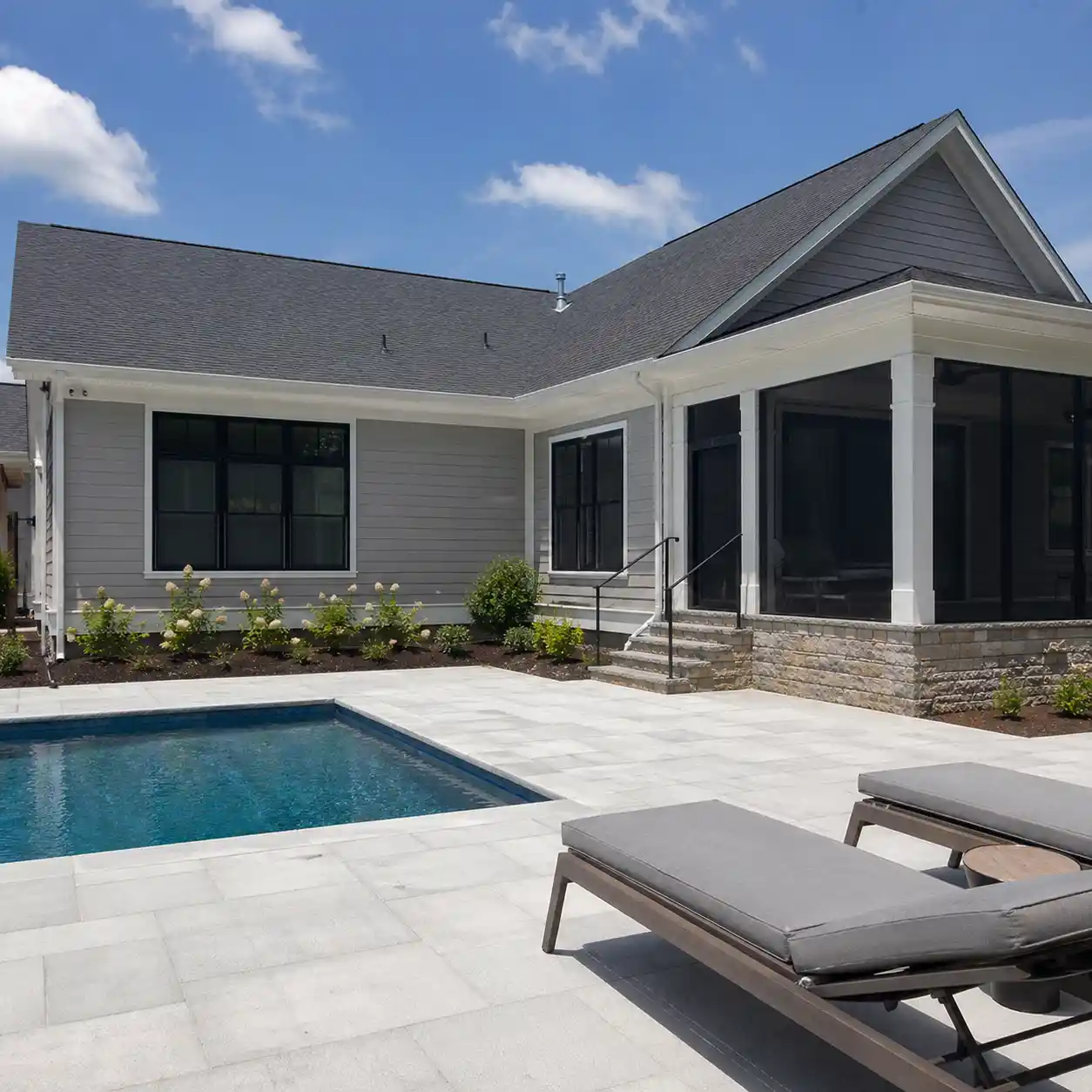
What We Pay Attention to on Every Pool Deck
Pool deck design involves a set of details that don’t apply to other deck projects. We address each of these on every pool deck build:
- Coping integration — The transition between the pool coping and the deck surface needs to be planned at the design stage. The finished deck height must correspond to the coping height so the transition is flush or intentionally stepped, not an accident of field conditions. We coordinate with pool contractors on coping height and work to this dimension from the start.
- Drainage slope — The deck surface needs to slope away from the pool and away from the house — typically 1/8 to 1/4 inch per foot. This keeps water moving off the surface rather than ponding, and directs it away from pool equipment and structure foundations.
- Pool equipment clearance — Pool pumps, filters, heaters, and electrical equipment panels need clearance for access and service. Deck framing around pool equipment areas is designed to allow access without requiring deck sections to be removed for routine maintenance.
- Hardware specification — Fasteners, post bases, and hardware in pool deck environments need to be rated for the chemical exposure that chlorinated water creates. Standard hot-dip galvanized hardware isn’t the right specification for this environment — we use stainless steel or specifically rated hardware throughout.
- Safety barrier compliance — Pool enclosure requirements in Virginia and local jurisdictions are specific about barrier height, gate hardware, and the relationship between deck structure and the required pool barrier. We design the deck with the fence and gate requirements in mind from the start rather than resolving barrier compliance after the deck is built.
How Pool Type Affects the Deck Design
The structural and design approach differs meaningfully between above-ground and in-ground pool deck projects. Both involve specialized considerations, but they’re different specializations.
Above-Ground Pool Decks
Decks for above-ground pools are typically elevated platforms that provide access to the pool at pool-wall height and create a usable area adjacent to the pool for seating, towels, and equipment. The deck typically wraps around a portion of the pool — commonly one or two sides — and connects via an entry point at the pool wall. Structural design is simpler than in-ground pool surrounds, and the deck doesn’t need to integrate with coping. The key considerations are the connection to the pool wall, load distribution around the pool perimeter, and safe access to and from the water.
In-Ground Pool Deck Surrounds
In-ground pool decks surround the pool at grade or slightly above it and need to integrate with the pool coping at a specific finished height. The area around the pool is often a combination of deck material and hardscape — the deck portion typically connects the house to the pool and provides the elevated seating and dining areas, while the immediate pool surround may use pavers, concrete, or a continuous deck surface. We work with the overall site plan to determine what the deck portion covers and how it connects to other outdoor surface materials around the pool.
Services Often Paired With Pool Deck Projects
Pool deck projects often involve additional elements that work best when designed together.
PVC Decking
Full PVC decking is our most recommended material for pool surrounds — no moisture absorption, chemical resistance, slip-resistant texture, and light color options that stay cooler underfoot. If you’re building around a pool, PVC decking is worth understanding as your primary material option.
Learn More →Multi-Level Decks
Many pool deck projects involve a multi-level design — the house connection deck at door height, steps down to a lounge level, and the pool-height surround at grade. We design the whole connection so the transitions are intentional and the levels work together as one outdoor space.
Learn More →Covered Decks & Pergolas
A pergola or shade structure adjacent to a pool creates a shaded retreat that complements the sun-exposed pool area. We commonly design a covered section at one end of the pool deck — a dining or relaxation area in the shade — connected to the open pool surround deck by the same continuous surface.
Learn More →Pool Deck Questions We Hear Often
Answers to the questions that come up most before a pool deck project gets started.
For most residential pool deck applications in Virginia, full PVC decking is our top recommendation — it doesn’t absorb water, resists pool chemicals, stays cooler than darker composite options, and maintains a slip-resistant surface throughout its service life. Capped composite in lighter colors is a strong second option. Pressure-treated wood works but requires more frequent maintenance in the pool environment. We discuss the trade-offs at the consultation based on your specific situation, budget, and how you want the space to look.
Dark-colored composite in full direct sun can get uncomfortably hot in Virginia summers. Light-colored composite and PVC products absorb significantly less heat — choosing lighter tones for a pool deck makes a real practical difference in comfort. PVC tends to run cooler than composite of the same color because of differences in material composition. We steer pool deck clients toward lighter color options and explain the heat retention differences between products at the consultation.
Yes. Pool decks require building permits in Charlottesville and in most surrounding jurisdictions, and the permit review typically includes the pool barrier compliance requirements alongside the structural review. In some cases the pool contractor handles pool-related permits and the deck contractor handles the deck permit separately — we coordinate on permit scope at the start of the project to make sure there are no gaps. We handle the deck permit as part of every pool deck project.
For in-ground pool projects, the pool and deck need to be sequenced so the deck can be finished to the correct height relative to the pool coping. Typically the pool is installed first (or simultaneously), coping height is established, and then the deck is built to meet it. We communicate directly with your pool contractor on coping height and sequencing so there’s a shared plan rather than two contractors working independently toward a joint finish. If you’re in the planning stage, involving both contractors early avoids the most common coordination problems.
Yes, and this is a common project — replacing an aging or cracked concrete pool surround with a composite or PVC deck. The existing concrete may need to be removed depending on the design, or in some configurations the deck can be built over it. The feasibility depends on the concrete’s condition, the drainage situation, and whether the new deck height works with the existing coping. We assess existing surrounds on a case-by-case basis and give you a realistic picture of what the replacement involves before scoping the project.
Ready to Build Your Pool Deck?
Fill out the form and we’ll schedule a free on-site consultation. We look at the pool, the grade, and the house connection before recommending anything — pool deck projects have enough specific requirements that the design really does have to start with the site. We serve homeowners throughout Charlottesville and central Virginia for both new pool deck builds and replacements of existing concrete or wood surrounds.
- Free on-site assessment — we evaluate the site before recommending a design or material
- Material recommendations suited to pool environment — slip resistance, chemical resistance, heat retention
- Pool contractor coordination for coping height and sequencing on in-ground projects
- Written proposal with firm pricing before any work is scheduled
Request a Free Estimate
Tell us about your pool and we’ll schedule a free consultation.