Deck Staining & Sealing in Charlottesville, VA
Regular staining and sealing is the single most effective thing you can do to extend the life of a natural wood deck. Virginia’s climate — hot humid summers, cold winters, and consistent rainfall — accelerates the deterioration of unprotected wood. A properly applied stain or sealer slows that process significantly and keeps the deck looking good in the process.
Request a Free Estimate
Tell us about your deck and we’ll schedule a free on-site consultation — no obligation.
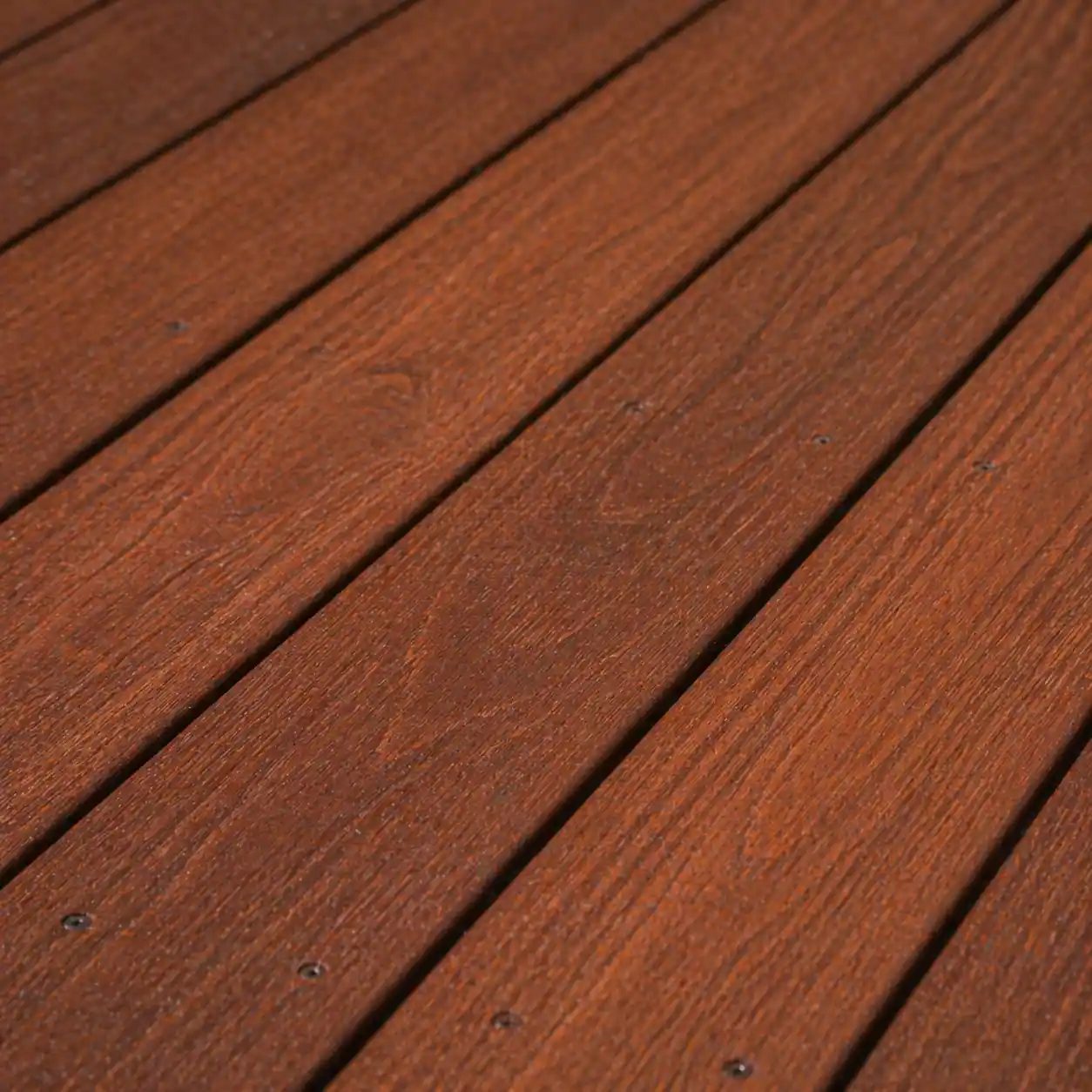
Protection That Pays for Itself Many Times Over
An unprotected wood deck in Virginia’s climate deteriorates faster than most homeowners expect. The combination of UV exposure, summer humidity, winter moisture, and temperature cycling works on unprotected wood continuously — causing surface checking, graying, raised grain, and eventually the conditions that allow water to penetrate into the wood and accelerate rot. None of this is inevitable for a deck that’s maintained.
A quality stain or sealer applied to a properly prepared surface accomplishes several things at once. It repels water, slowing the moisture absorption that drives most deterioration. It provides UV protection that slows the graying and surface breakdown caused by sun exposure. And for pigmented stains, it adds color that refreshes the appearance of a weathered deck and protects the wood surface from photodegradation in a way that clear sealers can’t match as effectively.
The cost of periodic staining — every two to three years on a well-maintained deck — is a fraction of the cost of board replacement or full deck replacement. Homeowners who stay ahead of maintenance consistently get more useful life from a wood deck than those who address it only when problems are already visible. At that point, some of the damage is already done.
Schedule a Free EstimateSurface Preparation Is Most of the Job
The difference between a stain job that lasts two years and one that lasts five is almost entirely in the surface preparation. Stain applied to a dirty, weathered, or previously coated surface won’t penetrate or adhere properly regardless of how good the product is.
We look at the deck’s current condition — existing finish type, weathering level, any areas of surface deterioration or structural concern. We also check whether the wood is ready to accept finish, particularly on newer builds where the lumber may still have elevated moisture content.
We clean the deck surface thoroughly — removing dirt, mildew, algae, and any failed previous finish that would prevent proper adhesion. This typically involves a deck cleaner or brightener applied before and after washing, using appropriate pressure for the wood species and condition.
We recommend a stain or sealer appropriate for the wood species, the level of weathering, the existing finish (if any), and the appearance you want — transparent, semi-transparent, or solid. Different situations call for different products, and we match the recommendation to what we actually find rather than defaulting to a single product for every job.
We apply the stain or sealer to the prepared surface following the manufacturer’s specifications — application method, coverage rate, and temperature and humidity conditions. Proper application technique affects penetration and adhesion as much as product quality does.
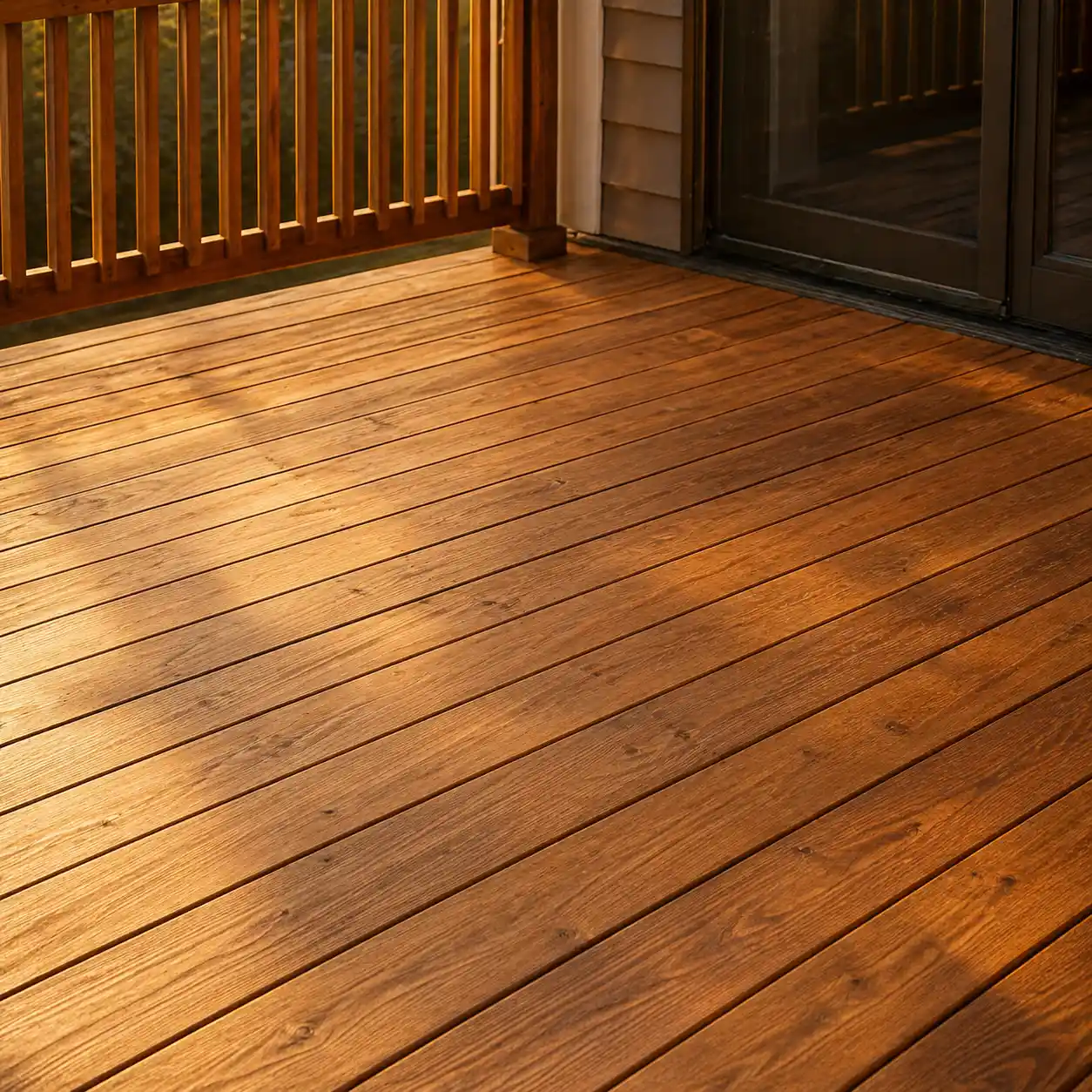
Transparent, Semi-Transparent, or Solid — What’s the Difference
The three categories of deck stain differ primarily in how much pigment they contain, which affects both appearance and performance. Understanding the trade-offs helps match the product to the goal.
- Transparent / clear sealers — Minimal pigment, maximum wood grain visibility. Best UV protection comes from pigmented products, so clear sealers typically require more frequent reapplication — every one to two years in Virginia’s climate. Best suited for newer wood in good condition where the natural appearance is the priority.
- Semi-transparent stains — Pigment that enhances or modifies the natural wood tone while keeping the grain visible. Better UV protection than clear sealers and longer reapplication intervals — typically two to three years. The most versatile option for most residential decks in good to moderate condition.
- Solid stains — High pigment load that completely obscures the wood grain. The best UV protection and longest reapplication interval of the three types, but once you go solid it’s difficult to return to a transparent or semi-transparent finish later. Best for weathered wood where the grain is no longer attractive or where a specific color is the goal.
We recommend the appropriate product category based on the deck’s current condition and what you’re trying to achieve. A weathered deck that’s been neglected for years is a different situation from a three-year-old deck that needs its second application.
When to Stain — and When to Wait
Timing matters for staining results. Applying finish at the wrong time — when the wood is too wet, too hot, or not yet ready — produces results that won’t last regardless of how good the product is.
New Decks — Wait 3 to 6 Months
New pressure-treated lumber is wet from the treatment process and needs time to dry before it will accept a stain or sealer properly. Applying finish too early traps moisture and results in poor adhesion and premature peeling. We advise new deck clients on timing and schedule the staining application when the wood is actually ready — which varies based on weather conditions and the specific lumber used.
Best Application Conditions
Deck stain applies and cures best in mild, dry conditions — ideally between 50 and 90 degrees Fahrenheit with no rain forecast for 24 to 48 hours after application. Direct hot sun during application causes the product to dry too fast, reducing penetration. We schedule staining jobs around appropriate weather conditions rather than forcing applications in unfavorable weather that will compromise the results.
Virginia’s Best Staining Windows
In central Virginia, the best windows for deck staining are typically late spring (May to early June) and early fall (September to October). Summer heat and humidity can make application conditions challenging during peak summer. Late fall applications risk not curing fully before cold weather arrives. Planning the maintenance cycle around spring or fall application typically produces the best and most durable results in this climate.
Other Services Worth Considering
Staining and sealing is often one part of a broader deck maintenance or improvement project. Here’s what we commonly pair it with.
Deck Repair
If the deck has boards that need replacing before staining, handling the repair and the staining together makes the most sense — the new boards can be stained at the same time as the rest of the deck, and the color match is as close as possible with fresh finish applied uniformly.
Learn More →Pressure Treated Decks
If you’re building a new pressure-treated deck, staining is part of the long-term maintenance plan from day one. We build the deck and schedule the initial stain application once the lumber has had time to dry — typically three to six months after construction depending on conditions.
Learn More →Cedar Decks
Cedar decks benefit significantly from periodic sealing — cedar’s natural oils provide some inherent moisture resistance but don’t eliminate the need for protection in Virginia’s climate. A penetrating oil-based sealer applied to cedar preserves its natural color and extends its life considerably compared to leaving it to weather unprotected.
Learn More →Deck Staining Questions We Hear Often
Straight answers to the questions that come up most before a deck staining project.
Every two to three years is the typical interval for a semi-transparent stain in Virginia’s climate, though this varies based on the product used, the amount of sun and weather exposure, and how well the previous application held up. Clear sealers typically need reapplication every one to two years. Solid stains can go three to four years before needing attention. The best indicator is the deck’s appearance and the water bead test — if water no longer beads on the surface, the protective finish has worn away and it’s time to reapply.
A stain provides both color and protection. A clear sealer provides protection without color change. In Virginia’s climate, a semi-transparent pigmented stain typically outperforms a clear sealer in terms of longevity because the pigment provides UV protection that clear products can’t match. The practical answer for most residential decks in this region is a quality semi-transparent stain — it protects better and lasts longer than a clear sealer, while still showing the natural wood grain. Clear sealers make sense on newer wood where the natural color is attractive and the homeowner wants to preserve it as long as possible, understanding they’ll need to reapply sooner.
It depends on the condition and type of the existing finish. A deck with a previous semi-transparent stain that has weathered evenly can often be cleaned and restained directly. A deck with a solid stain or paint that is peeling or failing needs the old finish stripped or sanded before new product can be applied — you can’t stain over a failing surface and expect the new application to adhere. We assess the existing finish condition during the initial visit and let you know what preparation is required before any product is applied.
Not always, but sometimes. Weathered decks with raised grain benefit from light sanding to smooth the surface before staining — this improves the appearance of the finished result and can improve adhesion. Decks with a previous solid stain or paint that needs to be removed require more aggressive sanding or stripping. Decks in reasonable condition that just need cleaning and a fresh application of the same type of product typically don’t need sanding. We make this determination during the assessment based on the specific deck’s condition.
The immediate effects are cosmetic — the wood grays, the surface becomes rough, and the appearance deteriorates. Over a longer period without protection, the structural effects begin: water penetrates the wood more deeply, accelerating the conditions that lead to rot in the board fibers and eventually in the framing members underneath. A deck that’s gone five or more years without any protective finish in Virginia’s climate will typically show surface deterioration significant enough that more extensive preparation is needed before restaining — and may have damage that requires board replacement before the staining project even starts. Staying ahead of the maintenance cycle is always less expensive than addressing significant neglect.
Ready to Schedule Your Deck Staining?
Fill out the form and we’ll schedule a free on-site estimate. We look at the deck, assess its current condition, and recommend the right product and preparation approach for what we find — not a standard package applied regardless of the situation. We serve homeowners throughout Charlottesville and central Virginia for both new builds ready for their first application and existing decks overdue for maintenance.
- Free on-site assessment — we look at the deck before recommending anything
- Proper surface prep included — cleaning and preparation before any product is applied
- Product recommendation matched to your deck’s condition and your goals
- Written proposal with firm pricing before any work is scheduled
Request a Free Estimate
Fill this out and we’ll be in touch to schedule your estimate.